

By Columbarian
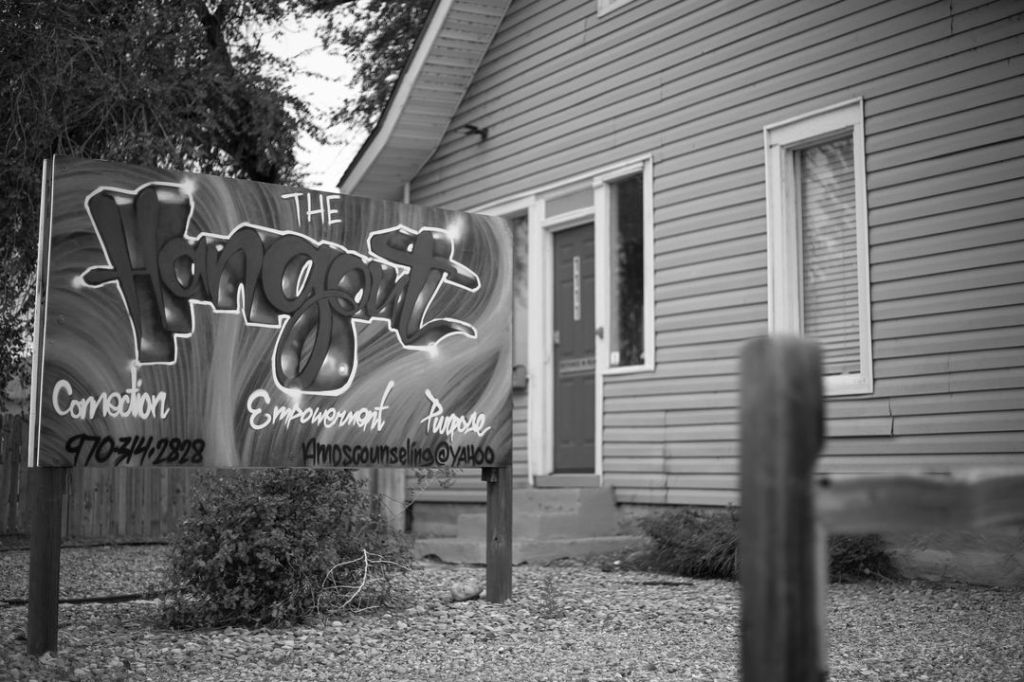
I visited the Amos Hangout for the first time on October 13th, the last day before its closure. The building was silent but for the footsteps of the few visitors and employees milling about the three rooms in the main area: a kitchen, bathroom, and open space with benches against the wall and a dining table. The crowd would come that evening for a gathering to commemorate the last night at the Hangout.
It didn’t take long to strike up a conversation with a fellow visitor, as I was offered a slice of microwave pizza almost as soon as I took my seat. The man who offered to share his lunch before he learned my name introduced himself as Nathan Lipman, and we sat together and discussed the past three months he had spent visiting the Hangout.
“I came here so I can make real meals. Not just, like, soup and bread. We come up with pork chops, hamburgers. You name it, we try to come up with it here.” According to Nathan, cooking at the Hangout was most often a collaborative effort. “If we need something, somebody’s got it. All you gotta do is holler outside that you’re cooking dinner, what you need and somebody will normally find it.”
Along with the use of the kitchen space, the Hangout enabled visitors to wash their clothes, store their belongings, use the bathroom, shower, shelter from the elements and stay in place without getting ticketed or arrested. These services required coverage through Medicaid and compliance with the list of rules posted on the walls, but were otherwise complementary. As covered in The Daily Sentinel article, “Amos Hangout house provides space for homeless to rest, eat and bathe”, the Hangout opened on October 1, 2023, funded by Medicaid and community donations rather than backed by city funds.
What I gathered from a phone conversation I shared with city council member Scott Beilfuss is that Amos has been fighting an uphill battle to keep the Hangout in operation ever since. In his words: “As far as I knew, they still were operating legally, but they had been harassed so much. For example, I’m sure you heard the story, but they got ticketed because their weeds were one inch too long from the legal length of weeds. It’s like, talk about harassment.”
“You know, [Councilmember] Cody [Kennedy] is coming from a law enforcement background, and that’s kind of the lane he’s in right now. He’s not thinking ‘solutions.’ He’s just thinking ‘shut-down.’ And, you know, I mean, that’s Cody, that’s his prerogative.”
Beilfuss declined from stating definitively whether or not this pattern of harassment from local government was the ultimate cause of the Hangout’s closure, stating, “You can’t just sit there and point fingers and say, absolutely, the city harassed them into closing. I mean, that’s what Amos, I think, is kind of leaning towards, so it’s definitely part of it.
“I don’t know what the whole deal was, but there are definitely people that are—again, you’ve come back to Cody Kennedy and some of the police force things—there are people that are there to shut things down and to close doors without solutions. And I just view this as another one of those types of things that we’ve done that we’ve stopped something that appeared to be a threat with no solution to the people they were serving.”
While the employees of the Hangout that I spoke with declined to comment on why Amos made the call to close the Hangout, the visitors I met were unanimous in their agreement that what they’ve seen over the past year is the city cracking down and the Hangout collapsing under the pressure. Also unanimous were the bleak prospects of how life would change after the Hangout closure the next morning.
“It’s going to be hell,” were the words of one visitor. “The cops are running everyone out of their campsites. HomewardBound is already full, so where is everyone going to go? To the streets. Then the cops are going to fuck with them, and then they go to jail. Then it’s winter, and everyone is sick.”
As I left the Hangout that day, a heavy, nauseous feeling followed in my wake. It took me a week to think of a name for it. Dread-ja vu. The meeting place of deja vu and dread, it’s the feeling that’s brought on by watching the same terrible thing happen over and over again, and over and over until a sick suspicion rises within you that this is always how the story ends. The feeling intensified as I read the next issue of The Daily Sentinel, quoting councilmember Cody Kennedy calling the resource center I frequent to share hot meals and pantry items with my community as “a crack house”, making the same claims of negligence and disturbance to the community that he made about the Hangout before it shut down.
As the nights grow colder and streets and jail cells grow more crowded, it’s clear that this city can’t take another closure.

 The Revolutionist