
By Peggy Carey
“Religion is a matter which lies solely between Man and his God…” Thomas Jefferson
It is a popular myth that the United States was founded by people seeking religious freedom. While it is true that the Mayflower held many pilgrims that were Puritans, who, having left England for the Netherlands to escape religious persecution, became dissatisfied and came to the coast of Massachusetts many were simply coming to escape poverty Maryland, on the other hand, was settled in 1632 specifically as a safe haven for Catholics. Despite these obvious religious beginnings, 140 years later, as the country began to form a federal government, freedom of religion for all, and the strict separation of church and state were championed by many, most famously by Thomas Jefferson.
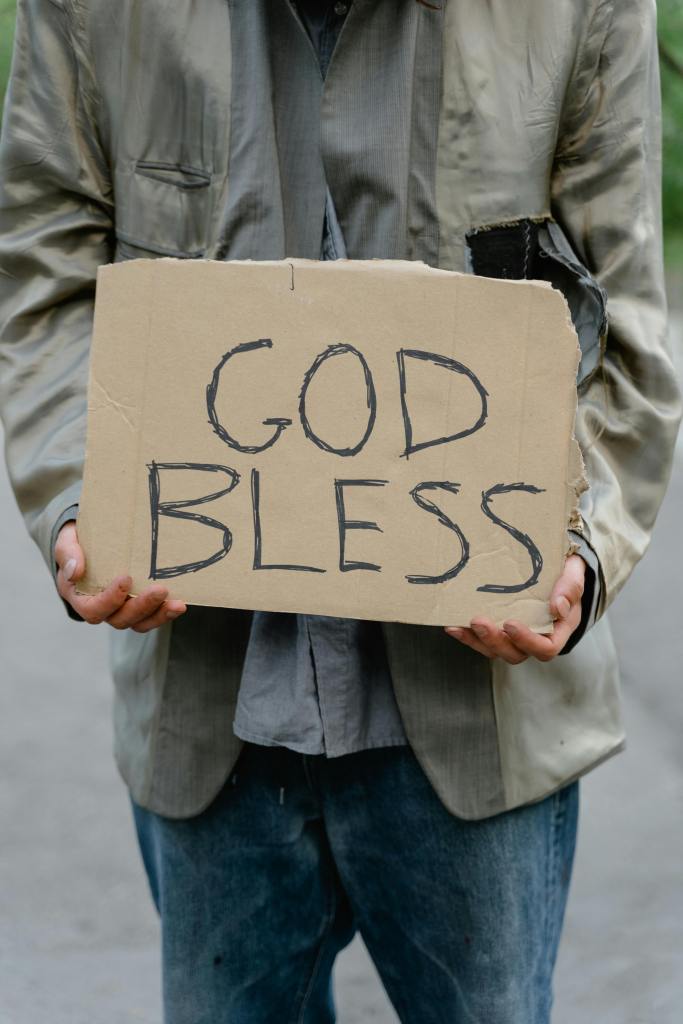
It’s been a battle ever since. From the imposition of blue laws, to the requirement that Jehovah Witnesses work on Saturdays, the courts and legislatures have engaged in a tug of war over whose law trumps whose. Recently this battle has reached even the town of Montrose, Colorado, situated in the Uncompahgre Valley, and boasting a population of 22,000. The conflict embodied the oldest of struggles: that between religious values and the governing body of a community.
Montrose has long struggled with how to address the issues raised by an increasing population of unhoused people. However, in November of 2024, the city passed a camping ban, which made it a crime to camp without permission within the city limits. The local Methodist church opened its vacant area to the affected population to camp. Not long after, the City began issuing tickets to the pastor, Kevin Young. To date he has received more than 20 tickets for being in violation of the city statute prohibiting camping. The pastor argues that it is his Christian duty to house the houseless, and to offer them succor. This position invokes recent cases by the U.S. Supreme Court addressing the conflict between local law and religious belief in action (often called preferences to sanitize the language).
The City statute has some exceptions: camping on private land with the permission of the land owner, camping on city land during a city event, and camping on city land while engaged in services for the City. This may be the undoing of the City ordinance, because in the Supreme Court case of Fulton v. Philadelphia, the Chief Justice summed up the issue, “This case falls outside Smith because the City has burdened the religious exercise of CSS through policies that do not meet the requirement of being neutral and generally applicable. See Church of Lukumi Babalu Aye, Inc. v. Hialeah, 508 U. S. 520, 531–532 (1993).”
Montrose argues that the ordinance was not designed to single out the unhoused, but the facts would indicate otherwise. Whether the exceptions are enough to void the ordinance under Fulton v. Philadelphia remains to be seen.
While Fulton is seen, rightfully, as a sword used against LGBTQ+ people, it looks like it might provide a shield for Pastor Young, and, thus, the unhoused.

 The Revolutionist