
by Payton Young
Most Americans spend a great majority of their waking hours in two places; The home and the workplace, or as I will refer to them, the first and second places. Between these exists a third place, somewhere between leaving work and going home to enjoy some sort of recreational activity and socializing. The “third place” can encompass any location that serves food and drinks and/or offers some sort of recreational activity like table games or fitness. These act as catalysts for conversation, which is the primary function outside of the business aspect for third places. Additionally, the third place cannot be defined by the individual! Just because YOU like to go and hangout at say, a Taco Bell, with your friends or coworkers after work, does not make it a third place. This Taco Bell (and most chain establishments) does not encourage hanging out through policies that discourage loitering or look to get as many people in and out as possible to turn a profit. But maybe this isn’t a good enough example. Let’s say YOU like to hangout at the library (pick one). The library primarily serves to facilitate NON conversational activities, in this case studying or reading. While there can be additional aspects of the libraries’ whole structure that encourage activities (community rooms, children’s spaces, etc.) these can be more attributed to being additions of the library rather than independent functions of the structure. It should also be noted that the newer the construction of a place, the less likely it is to become a third place. Even if it is something geared specifically to bring about a third place, it often takes a good bit of time to see that fulfilled.
This theory of the Third Place was crafted by Ray Oldenburg, who, if you ask me, was kind of a fuckin dork even for his own time. This 3P theory is rooted in his view that the standards associated with pre-integration democracy were perfectly fine, and that the progressive movements in the United States were effectively leading to the death of the Third Place. In his writings on the Third Place, he goes on to defend the existence of the third place as a white man’s hetero get away from their wives and the radical movements of the 1960s and 70s (Civil Rights, Gay Liberation, Feminism, Anti-Vietnam war, etc if you’ve been living under a rock.) His worldview politics aside, he also doesn’t bring anything to the table in order to see the revival of the third place. He acknowledges that zoning and planning commissions won’t cater to the needs or wants of the people. Making it entirely up to the free market to save us (when has that worked?) One decent point he sees is that the commercialization of recreational activities makes it difficult to bring 3Ps around. The game hall died so I could play ping pong and pool at home, effectively alienating people from social interaction in a whole public sphere.
But what is alienation exactly? A short way to describe it is that humans, as a species, are driven to compete with each other for wages or work under the impression it is to their benefit. But while the wages stagger, profits are extracted at a greater and greater value. Additionally, workers are separated from what kind of production is being done and for who. Johnny Cash wrote a whole song about not being able to afford the cars he worked on. Alienation, as Karl Marx describes it as driven by our second place (work). An inherently economic thing. Ray Oldenburg takes this economic alienation and instead sees it as “urban” alienation. In the sense that the broadening of urban sprawl splits communities up, reducing people into roles that are task oriented . Estranged Labor as described by Marx perfectly encapsulates how people maintain their humanity through social spaces. Here I will paraphrase: “Workers are truly free when they get to eat, drink, have relations, dress up or even spend time in their own domicile. These, separated from activity, are isolatory.” Basically, the third place restores our humanity.
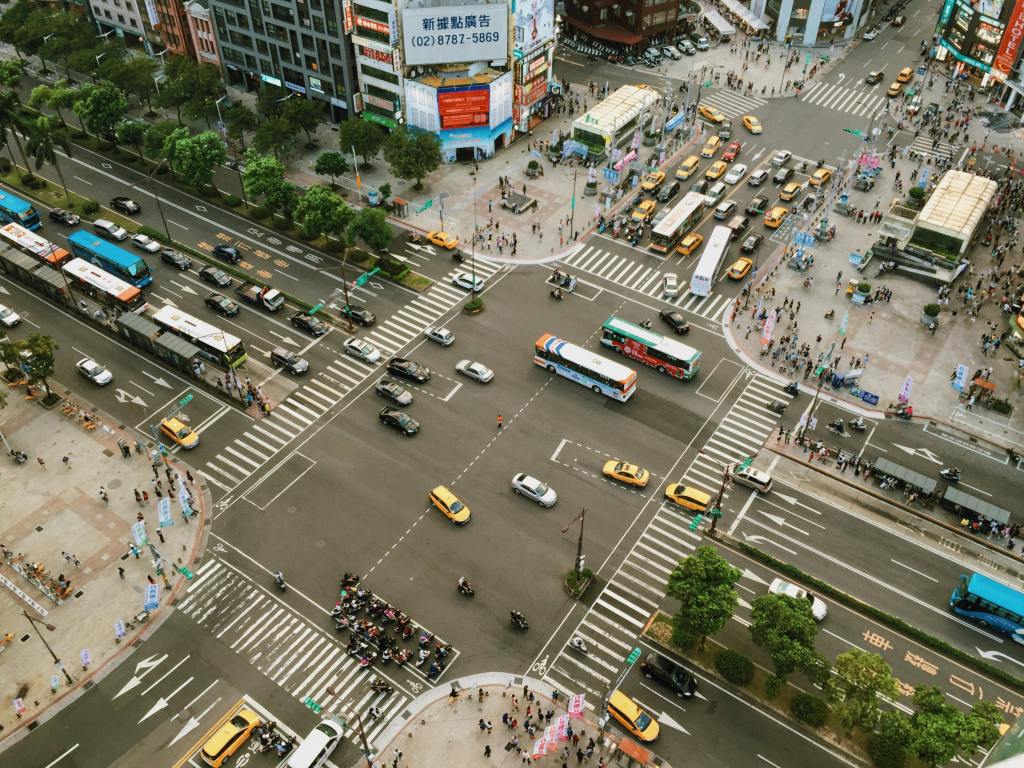
While we investigate Marx and his thoughts, let’s talk about Henri Lefebvre. Like many members of the French Communist Party in his time, he was very critical of Stalin’s USSR. Lefebvre sees socialism not as a bureaucratic economic transitional period helmed by a vanguard party. He insists upon the dissolution or “withering away” of the state through progressively spontaneous self-governance. Moreso an active project than a period. If you were to ask me, I’d say Lefebvre is more adjacent to anarcho-syndicalists or libertarian socialists like Murray Bookchin than any sort of Marxist-Leninist. But those are my two cents. Lefebvre puts a great deal of his thoughts on urbanism into his work “Writings on Cities” where his theories of the Right to The City were born. This concept I will expand on in a second piece, but for now let’s keep it short. The right to the city, essentially, makes the urban and the city distinct from each other. The urban is a shapeless post-industrial amalgamation that has been greatly impacted by the automobile. With cars being pretty much the only way to really do anything in an urban space, why the hell would you just make the city walkable again if it’s not profitable for Big Automobile or tourism? On the other hand, the city is basically just that. A walkable, livable city that offers balance. Lefebvre weighs heavily on the fact that most contemporary walkable cities are almost purely an attraction. A tourist destination to extract wealth from visitors and nothing more. Hell, even the workers in the contemporary walkable city may not even live there given the expenses associated with it and the garbage wages workers are offered. This “return” to the city from the suburbs is liberal nostalgia. The walkable city under capitalism isn’t needed because of the dominance of the automobile creating the opportunity for urban sprawl.

We, as people living under capitalism, cannot go forward or backward in terms of development without any economic shifts. Cities are constructed on the basis that there is economic activity or production in that area which necessitates working out what transport is most effective for that economic production. Industrial revolution era cities often featured trolley cars in central parts of the city to assist in movement. But without limitations to what kind of transportation is available to be done, urban sprawl takes advantage. The era of the individual automobile has created a dominantly car oriented culture. Leaving the movement of carless people out of how development is done. While there are ways we can have a say, be it through working with developers to reduce state power over control or entertaining zoning commission meetings to block or support motives, these are really just kiss ass ways to further the capitalist market influence upon how we live. So what do we do as socialists? We should demand that developments be put in the control of the people who live where development is being done, rather than the few choice makers in the market. Giving the people the Right to The City allows people to make informed decisions regarding where and what is built. Are we building more affordable housing closer to town? Are we investing in high speed rail, trolly lines, or protected bike lanes? Are we trying to offer more recreational activities for our community (Third places?) Will I ever get a bodega on the corner of my block? These are all very real possibilities when giving the people a say in what is done. It is, also, very utopian in thought. But if you’ve ever read anything pertaining to subjects in urbanism, it’s all utopian. Each theory offers an ideological counterpart in how an ideal world would be designed. Market driven theories extend power to the bourgeois powers. The Right to The City allows people to seize the means of city planning. Giving them the ability to transform any facet of living away from the profit motive. Lefebvre describes the struggle for the Right to The City as a political program of urban reform not defined by the limitations of current society, but it should be rooted in realistic thinking. And that the RTC advances utopian projects regardless of feasibility. Moving from theory to praxis to iron out the creases.
Another important Marxist urbanist, David Harvey, was a huge supporter of Lefebvre’s Right to The City. He talked about how the places we live effectively shape us socially and psychologically and recognizes that we have little to no say in how that environment looks. Expanding on the Right to The City, he acknowledges that it is effectively capitalist exclusive in our current day. The RTC under the control of bourgeois powers serves to extract profit at the expense of the living community. Spiking rents, stagnating wages, alienating workers and pushing the less capable to the fringe. Uprooting longtime communities to welcome investors and customers with open arms. Harvey writes in The Right to The City (2008) that: “The question of what kind of city we want cannot be divorced from the question of what kind of people we want to be, what kinds of social relations we seek, what relations to nature we cherish, what style of daily life we desire, what kinds of technology we deem appropriate, what aesthetic values we hold.” In this book he also emphasized that urbanization/suburbanization serve as development mechanisms for the capitalist class. Gentrification and “urban renewal” work hand in hand to force working class people out of profitable plots of real estate into fringe locations. Only to rinse and repeat once the place where working class people live becomes an interest to investors.
Let us be very clear though. The Right to The City is NOT a centrist or right-wing ideological way of thinking. RTC rejects the need for capitalist interests to have a say in what is done, and rejects the idea that the free market/capitalist powers will just forgo the profit motive. Folks who subscribe to the RTC style of thinking understand that we, as people, cannot be saved by land developers. Working with them will effectively take away our power and reinstall the capitalist foothold that focuses on combating people’s urban movements. Some readers, now, may need some form of distinguishing between the socialist RTC idea of rights and the Liberal-Democratic idea of rights. Liberal-Democratic rights are defined through social contracts between the state and citizenry; citizens must give up their autonomy and power for the security of the state. Often, Liberal-democratic rights are described as God-given or granted by the purview of constitutional framers. An illegitimate separation of civil society from the operation of the state. Herni Lefebvre argues that deepening the contract to attain the rights to the city will bring new rights. These being rights to information, difference, self-management and the titular Right To The City. Rights, essentially, are the outcome of political struggle. Subject to further changes for maintenance or continued establishment.
So how do we get there? Well, familiarity with the concept is an obvious basis to start with. But in the grand scheme, civil society should become more politically active across industries. Exponentially more politically active in the case of Americans especially. The citizenry should appropriate their power and demonstrate the ability for collective self-management. For any Marxist adjacent thinker, urbanism is an untapped well of knowledge and theoretical exploration. As the climate degrades and our ways of living grow ever more unsustainable, humans as a species should take back their autonomy and work to reach a sustainable way of living. I leave you with this question: If you could construct anything you want within your neighborhood, what would you do?

 The Revolutionist