
By Robyn McBurney
I crossed the border into Palestine thinking I was prepared.
I had read the history. I had studied the language. I have a degree in Middle Eastern and North African Studies, focused largely on the Palestinian liberation struggle. I watched footage, listened to testimonies. I knew the vocabulary of occupation — checkpoints, settlements, raids, administrative detention, “closed military zones.” I knew the talking points Americans repeat to sound informed without acknowledging culpability, while our representatives pay lip service to peace and fund genocidal campaigns at home and abroad.
What I didn’t know — what you cannot know until you stand inside it — is what it does to your nervous system to live under a regime built not only to control movement but to control dignity.
Within a day of arriving, I was strip-searched by the Israeli army because they suspected I might speak Arabic.
Let that sink in. Not because of something I did. Not because of a weapon. Not because of a crime or threat. Because of a language — because I might understand what was being said around me, because I might be visiting Palestine rather than the occupying tourist trap. Imagine the global uproar if Italy refused to allow Catholics into the Vatican because it disapproved of the Pope’s politics.
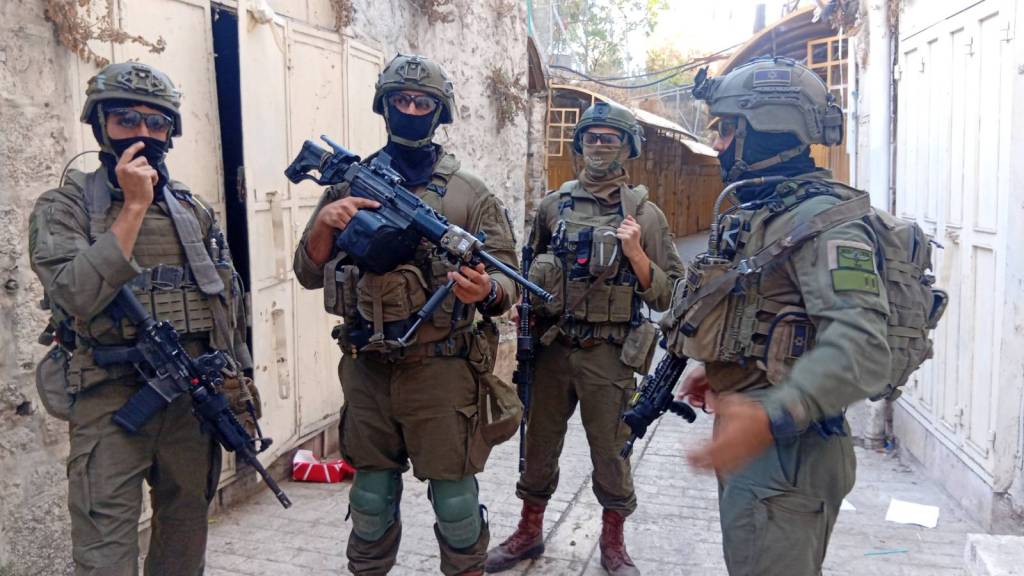
The soldiers shouting in my face were young enough to be teenagers, armed like they were patrolling a battlefield. The power differential was the point. The humiliation was the point. Even the casualness of it — the curtain opening, another soldier looking at my uncovered body and leaving without explanation — was part of the design: You are not entitled to privacy. You are not entitled to comfort. You are not entitled to respect.
And then, after hours of escalation, I was allowed through. A pat down turned into a smile. The same woman who’d forced me to expose my body told me she hoped I’d “enjoy Israel.”
That whiplash is intentional. Occupation isn’t just brutality; it’s the constant reminder that your treatment is arbitrary, dispensed at the whim of individuals and a system that will never have to justify itself to you.
When Americans talk about Palestine, many treat it like an abstract moral debate. A policy issue. A “complex conflict.” But in Palestine, the architecture of control is unmistakable.
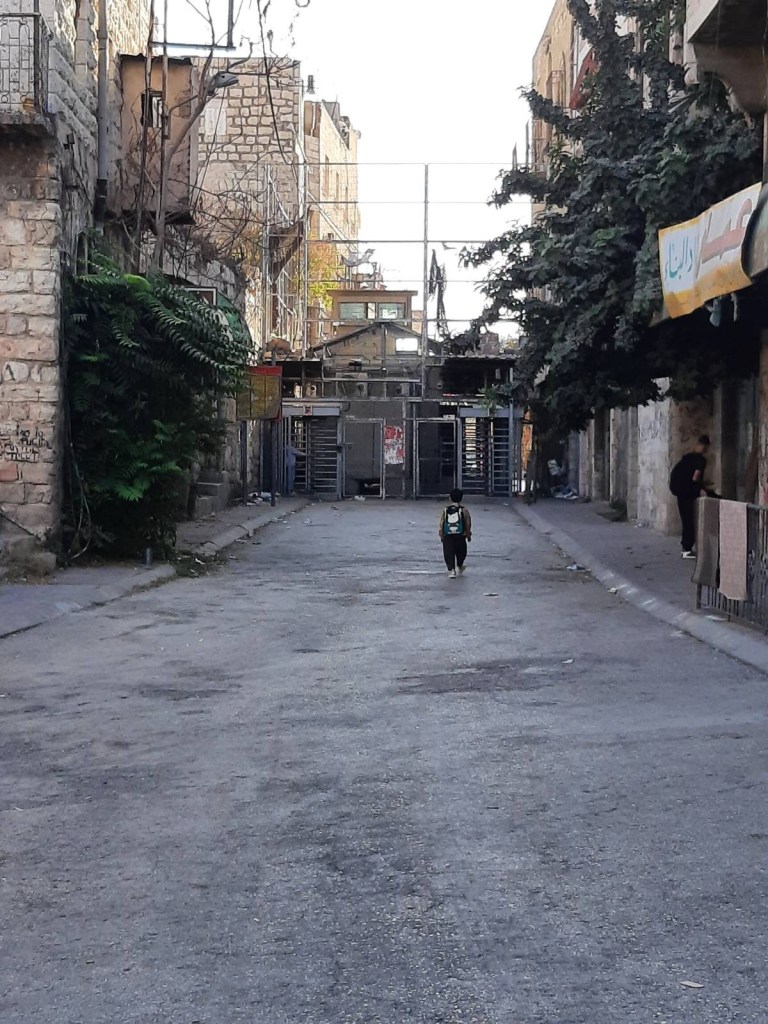
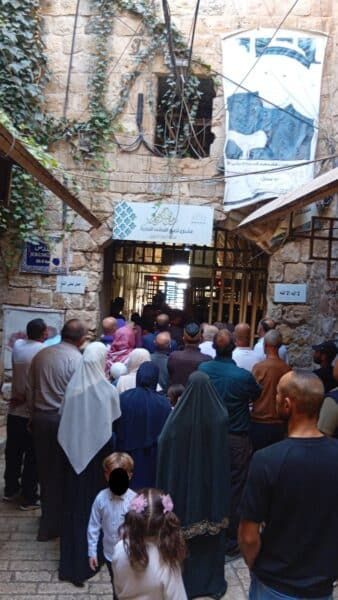
In Al Khalil (Hebron), where I volunteered, occupation isn’t hidden behind euphemisms. It’s a daily, physical presence: armed soldiers posted at choke points, surveillance cameras fixed like unblinking eyes, streets closed on command, rooftops turned into sniper perches, shop fronts shuttered not by economics but by military orders, sometimes permanently.
And then there are the settlers.
If you’ve never walked through a city where illegal settlers live above Palestinian families — literally above them — dumping trash and contaminated water onto the streets below, you might still believe the lie that this is a normal neighbor dispute. It isn’t. It’s displacement by denied permits, harassment in uniform, theft with tour guides.
Yes, tour guides. In Hebron, soldiers clear Palestinians from their own streets so groups of potential settlers — often from abroad — can walk through the Old City and imagine themselves inheriting someone else’s homes and shops. The army puts on a show. The streets become a stage. Rifles and live ammunition are props. The message is choreographed: Your home is not yours, even if your grandparents built it. Even if your children were born here. Zionist graffiti and political banners around Al Khalil declare “Palestine never existed, and never will.”
I watched families with strollers roll down streets cleared at gunpoint minutes earlier of local children playing soccer. I watched journalists get threatened for filming it, laser sights trained on marked press. I watched the occupation outdo itself daily, confident in its impunity.
And yet — this is what I need Americans to understand — Palestinians endure all of this while still insisting on life.
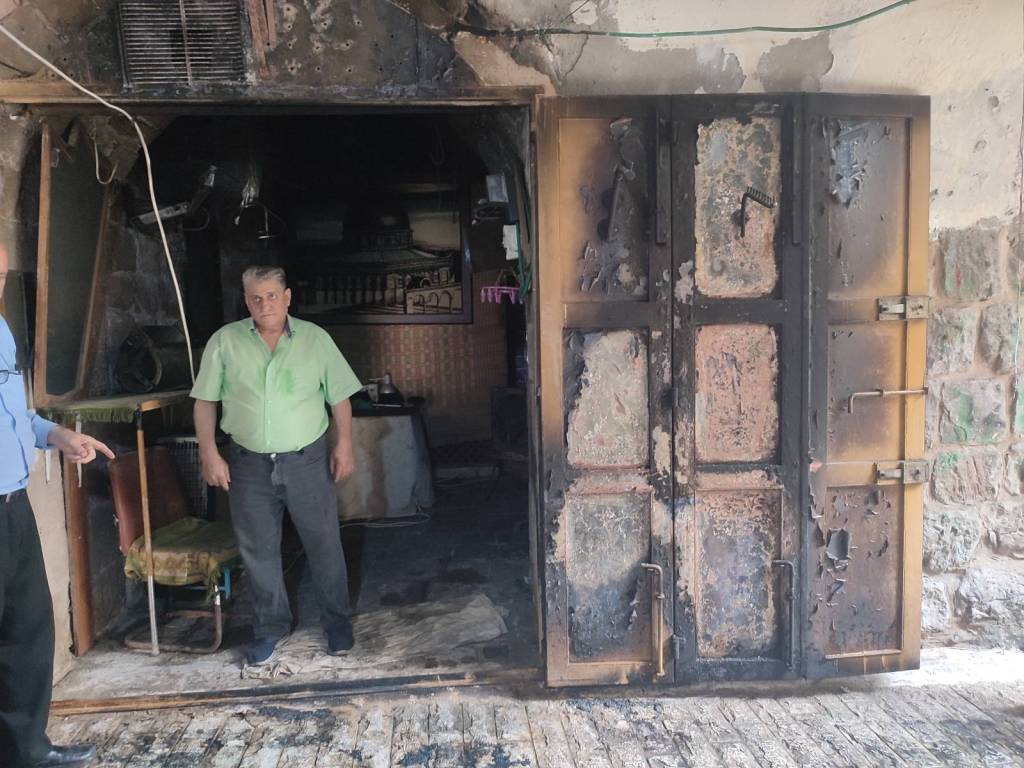
They insist on school, even when it’s reduced to three days a week as teachers go unpaid. They insist on prayer, even when checkpoints become holding pens and soldiers delay worshippers past prayer time. They insist on harvesting their crops, even when settlers show up masked and in groups to beat them off their land. They insist on working, opening shops under wire netting meant to catch what’s maliciously thrown from above. They insist on community, offering coffee and candy to volunteers at dawn, thanking us for simply bearing witness.
This is steadfastness. Sumud. Not passive suffering. Not quiet acceptance. A disciplined, deliberate refusal to disappear.
In the U.S., we love the aesthetics of resistance. We quote Dr. King and Katniss and post black-and-white photos of marches. We buy shirts that say “Be the change.” We treat courage like a brand.
But Palestinians practice something harder: endurance without applause.
They practice it when there is no trending hashtag, no sympathetic cable news segment, no promise of justice in their lifetime. They practice it knowing tomorrow will likely bring another demolition, another raid, another neighbor martyred — and still, they go on. They practice it knowing this isn’t a string of isolated incidents but a system designed to make life unlivable.
Americans, by contrast, are conditioned to quit when resistance becomes inconvenient. We confuse discomfort with danger. We’re encouraged to believe that if a problem doesn’t yield to a phone call, a vote, or a viral post, it must be unsolvable — or worse, not worth our time. We have a protest culture that treats showing up once as the moral equivalent of dedicated organizing.
Palestine exposes that fragility.
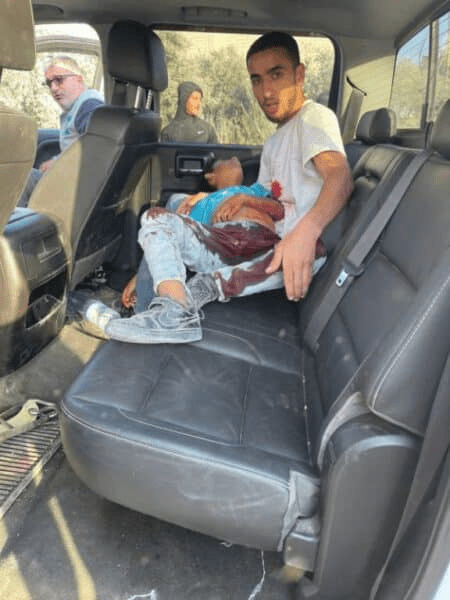
Because Palestinians don’t get to “take a break from politics.” Politics shows up as an armed teenager at your door. As a gate that won’t open. As a roadblock that turns a 40-minute commute into three hours. As a “closed military zone” that includes your family’s olive grove. As a bureaucracy that holds bodies hostage from grieving families — by policy.
And nevertheless, they persist.
If you’re an American reading this, you might feel the urge to ask, “What can I do?” Sometimes that question is genuine. Sometimes it’s a way to soothe our guilt by turning horror into a checklist. So here’s the harder question: What are you willing to sustain?
Palestinians don’t need Americans to feel sorry for them. They need Americans to stop funding, excusing, and normalizing the machinery that crushes them — politically, economically, culturally. They need us to recognize that “neutrality” in the face of apartheid is not neutrality; it is collaboration.
Palestine taught me that oppression depends on people in the imperial core being willing to look away. Intimidation works best when no one’s watching. Sometimes, merely filming — merely standing there — changes the calculus. Not always. But sometimes. The presence of eyes matters. Why else do they wait for global attention to wane before ramping up killings? Like clockwork.
It also taught me that steadfastness is contagious. I saw it in shopkeepers who asked us to stand nearby during incursions, knowing harassment increases when they’re alone. I saw it in families offering food and thanks after a disappointing harvest, because community is resistance. I saw it in Palestinians who could still joke, still make art, still show grace Americans might call miraculous — but is really practiced.
And it taught me that Americans misunderstand power. We think power is what governments do. But power is also what ordinary people refuse to accept as normal. It’s what workers withhold. What students disrupt. What communities organize. What humans demand — repeatedly, relentlessly, without waiting for permission.
That kind of power requires sumud.
If Palestine can teach Americans anything, it’s that freedom isn’t won in one dramatic moment; it is built through thousands of small acts of refusal: refusing to abandon a home. Refusing to let the world forget. Refusing to accept cruelty as “just how things are.” Refusing to be erased.
I came to Palestine expecting to witness struggle. What I witnessed was a people practicing life as an act of defiance.
So if you want to honor Palestinians — don’t just repost. Don’t just rage. Don’t just mourn.
Learn steadfastness. Learn the discipline of sustained moral clarity. Learn to keep going when it stops being trendy. Learn to resist the pressure to “both sides” the unacceptable. Learn to hold your own government accountable — not someday, not when it’s convenient, but now and consistently.
Because Palestinians don’t get to log off. And the least we can do, with all our safety and supposed democracy, is refuse to look away — and refuse to back down.
###
The Revolutionist is 100% volunteer run and subscriber funded. We do not sell our soul for advertising dollars, nor do we prostrate ourselves for grants from the non-profit industrial complex. We are community media. Join the community! Subscribe today at whatever rate you can and get a hard copy of The Revolutionist in your mailbox. Subscribing subsidizes free distribution copies.


 The Revolutionist