
by Jacob Richards
Editor’s note: We have changed the names of many of our sources in this story. They are everyday people with kids and jobs who have taken it upon themselves, at great personal risk, to keep their community safe. Their ability to continue to do powerful work in their community depends on their ability to stay out of the spotlight.
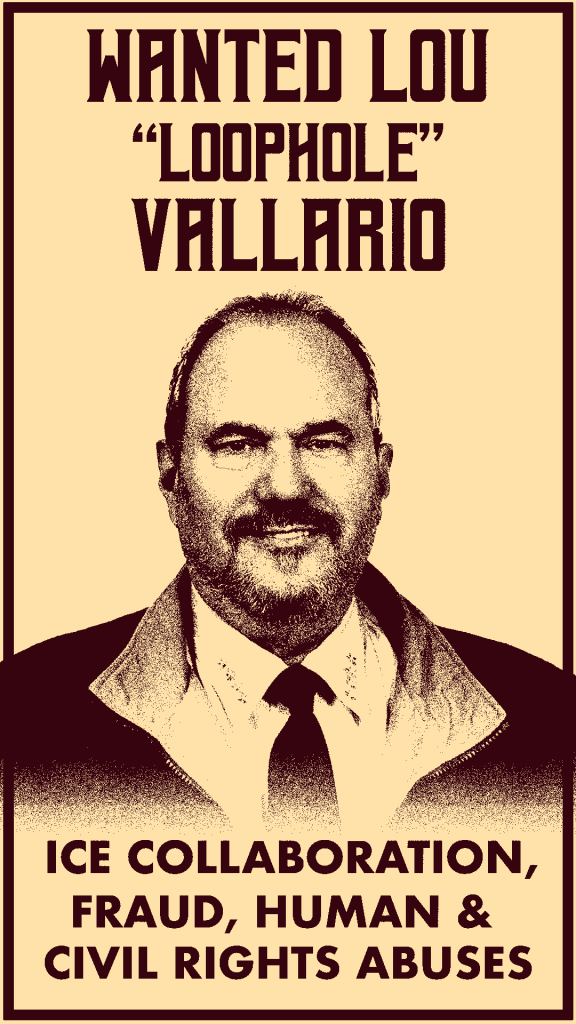
At the end of February, Garfield County Sheriff Vallario and Garfield County Sheriff’s Office (GCSO) were served with a cease and desist letter, by Towards Justice, which alleged that Vallario, the GCSO, and an off-the-book interagency drug task force SPEAR have been knowingly and illegally aiding civil immigration enforcement.
The letter alleges that Lou Vallario’s county jail, his patrol deputies, and his unaccountable task force SPEAR (Special Problems Enforcement and Response) have been in violation of Colorado laws sharing personally identifying information (PII) and arresting, transferring, and holding people for immigration enforcement.
“Sheriff Lou Vallario has shown a shocking disrespect for state law. For someone who’s taken an oath to uphold those laws, his statements and conduct are deeply troubling. Sheriff Vallario and other law enforcement across the state seeking to collaborate with ICE must know that they are not above the law,” said David Seligman, executive director of Towards Justice and candidate for Colorado attorney general.
Seligman is getting at a bigger issue — that as bad as Lou Vallario is, he is just the poster boy of the lawless Western Slope, and Vallario’s lead is being followed by agencies and departments across Western Colorado.
“We are seeing evidence of law enforcement’s collaboration with ICE, we are seeing what we call peace officers choosing not to respect the law,” said Colorado House Representative Elizabeth Velasco, speaking to the widespread issues with local law enforcement in our region choosing not to follow state laws.
“Mister Justice”
The Colorado General Assembly has found that local law enforcement cooperating with federal agencies tasked with federal Title 8 immigration enforcement “undermine[s] public trust” and that a clear separation between local law enforcement and ICE is “necessary . . . to promote public safety,” reads the cease and desist letter.
“I call him Mister Justice. I don’t say his name, I say Mister Justice cause he thinks he can do what he wants, that he is in power over everything and so nobody can say anything,” said Angel, not their real name. They are a pillar in the latino community in the Roaring Fork Valley and driving force behind a Spanish language Facebook page dedicated to keeping the community informed.
“We don’t have confidence in the police around here,” Angel said, explaining that the immigrant community sees no difference between city police officers, sheriffs deputies, and federal agents.
“People, they ask me, ‘can I just call the ambulance?’” said Angel. “They worry ‘what happens if the police arrive first.’”
And the Latino community’s skepticism is well founded.
“You have to think about SPEAR as a siphon,” said Pat, not their real name, a Glenwood Springs citizen investigator. “Every traffic stop, every interaction by every police officer from Carbondale to Parachute is logged in a county-wide police intelligence-sharing database, which federal officers in SPEAR, agents tasked with immigration enforcement, have unfettered access to.”
The data from every traffic stop, every interaction in every community and the county, gets fed into a database called “New World,” and federal immigration enforcement agents have full access to this Orwellian-sounding database. This means every traffic stop, every law enforcement interaction, in Garfield County has likely resulted in illegally shared PII with federal agents in violation of Colorado law SB25-276.
This is likely how, this past October, a mother of two called the Glenwood Springs Police Department (GSPD) for help finding her missing 13-year-old child and ended up in ICE custody and then being deported, leaving behind a medically dependent 2-year-old child, who is a U.S. citizen.
Vallario vowed to violate the state law limiting the sharing of PII, even before it was a law.
“I have never refused to enforce a law, but I will not comply with this, if this draft is the end result. You can call me ‘Defendant’ in a lawsuit to correct this pro-criminal stupidity,” Vallario wrote in an email about the pending legislation, which became law.
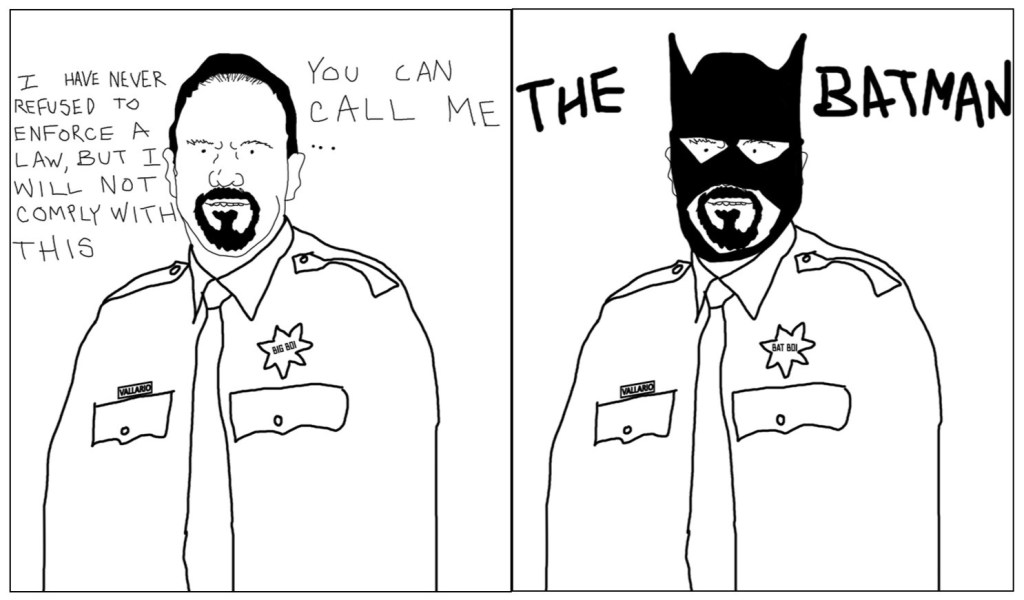
Vallario may get his wish to be called “defendant.” A cease and desist letter is essentially a shot across the bow — a warning of impending litigation. It is the first step that must be taken before a civil suit can proceed. It was served to both Vallario and Colorado Attorney General Phil Weiser. Weiser’s office had thirty days, which has since expired, to either launch an investigation or allow the civil suit to proceed. Additionally, it serves as notice to not destroy relevant records.
Foundational to the cease and desist letter is a tranche of almost 1,000 pages of emails released via a Colorado Open Records Act (CORA) request. The emails are largely from Vallario to the “member” agencies that are a part of SPEAR.
The emails, taken as a whole, paint a picture of a man who is petty and vengeful. A leader who is more concerned with public perception than facts. A man who uses crude jokes and jocular masking as a way of discrediting, normalizing, and undermining professional ethics and conduct. A man for whom the law is an afterthought and transparency an affront to his authority.
The cult of Lou
There is this culture of ‘this is how we do things because Lou said so,’” said Pat. “It really does feel like a county-wide cult of Lou Vallario.”
In one email, Vallario shared a photo of State Rep. Elizabeth Velasco holding an anti-ICE sign at the June 14 No Kings Protest in Glenwood Springs. Vallario wrote, “Our District 57 State Representative, Elizabeth Velasco. Aren’t you proud of her? POS [Piece Of Shit] . . .”
“Absolute Lunacy,” replied Parachute Chief of Police Samuel Stewart.
“She is GARBAGE!!!!!!” (Yes, six exclamation points), added Rifle Chief of Police Mark Tyler.
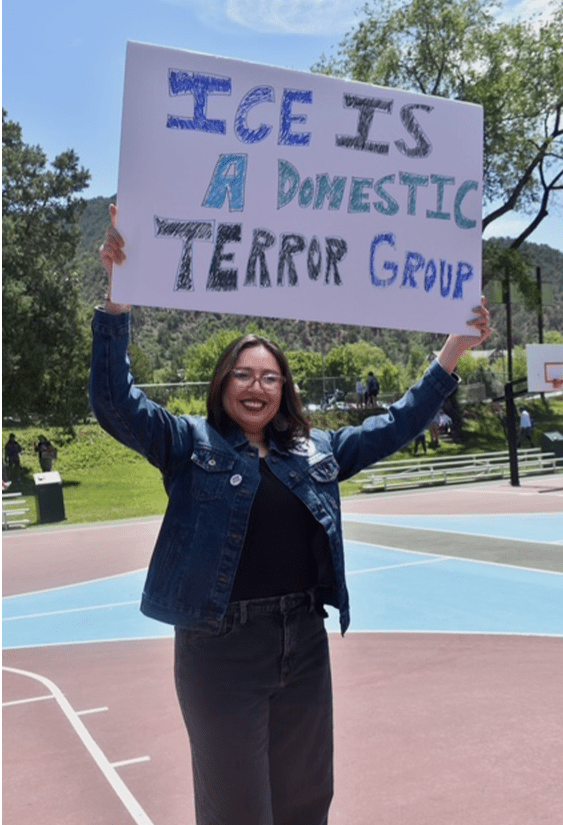
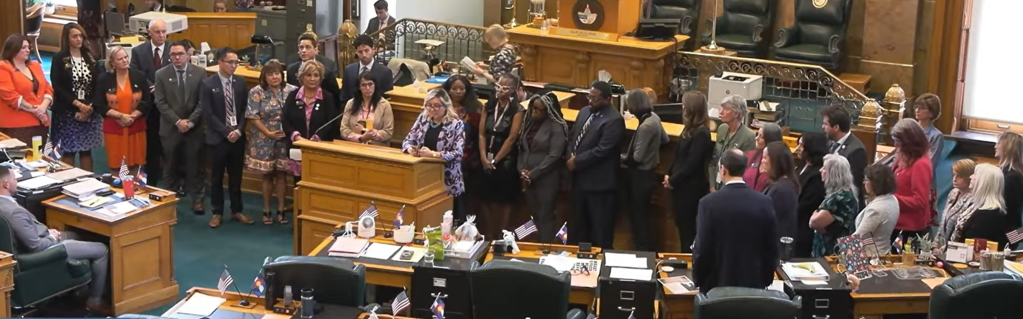
Velasco fired back from the floor of the state capital on March 2. “How are our community members supposed to trust our government or judicial system, elected officials, and law enforcement, when they are utilizing a multiagency work email chain to share a picture of a state representative that is also an immigrant to talk about political messaging and how they have no intention of following the law?” asked Representative Velasco, with 29 lawmakers behind her standing in solidarity.
She said the email thread exposed “how law enforcement does not respect even the most basic of our constitutional rights.” She continued, “Every individual from the DA’s office to the Colorado State Patrol (CSP) fell in line with the sheriff’s behavior.”
Velasco was far from the only person subject to Vallario’s ridicule.
In a Feb. 2025 email Vallario wrote: “Alex is running scared,” mocking Alex Sanchez, president of Voces Unidas, a Latino advocacy organization based in Glenwood Springs, after Sanchez emailed the Glenwood Springs Police Department in an attempt to confirm ICE activity near the courthouse.
In the same email, Vallario joked, “I have a great idea: I’m going to put up a sign at the SO [Sheriff’s Office] entrance that says, ‘Warning ICE’ and see how many people look down and how many look over their shoulder!”
Vallario lashed out at the judiciary in another email, after a judge failed to issue a search warrant on Vallario’s preferred timeline. “Gotta love the worthless judicial system . . .” he wrote.
In addition to having no respect for the judiciary, Vallario also doesn’t have respect for the legislative branch. In one email, he wrote, “It’s the silly season at the Capitol, so I’m sure there’s some legislation we will want to discuss.” In another email, explaining why he couldn’t possibly enforce Colorado’s law forbidding civil enforcement in and around Colorado’s courthouses, he wrote, “Lawmakers making laws when they know nothing about the law…….!”
Maybe he is more of a corporate guy? Not if you don’t provide his task force officers (TFOs) with the evidence they want quickly enough. Vallario wrote about his new “shopping program” at Lowe’s: “Steal whatever you want because they won’t cooperate with law enforcement . . . I can’t wait for Christmas stealing season! I know where I’m getting all my gifts from!”
Maybe he is just a man of the people? Nope. Vallario joked in another email, after a civilian asked for a tactical demonstration of SPEAR at an event, that in real life his deputies “would just shoot them on the spot! J/K!”
But Vallario’s lawlessness can be seen most clearly in his pet project, SPEAR.
SPEAR: suspiciously powerful, entirely above regulation

SPEAR first caught our attention with its logo, which uses Spartan iconography that’s generally associated with the far-right, neo-Nazis, and 2nd Amendment radicals. The Rev published a story about it back in October of 2024.
SPEAR was created at some point in 2022 — it’s hard to say when; it’s vague. Everything from SPEAR’s formation, ongoing operations, finances, relationship with ICE, and even the numbers in their slick public relations are hard to pin down. And that is by design.
SPEAR was formed by reorganizing the Two Rivers Drug Enforcement Team (TRIDENT) and TAG (Threat Assessment Group) into a new organization, which was first mentioned in a press release on Halloween of 2022, which described SPEAR as “a newly established ‘task force’ in Garfield County.”
Why the quotation marks around “task force?” Almost as if GCSO knows that it’s not a real task force? Well, turns out it’s not a real task force.
Despite forming sometime in 2022, SPEAR has operated with no bank account, no website, and no formational documents.
Emails show that Vallario hadn’t even thought about creating a legal basis for the organization until the summer of 2025, after a formal request for documents had already been filed.
In the emails Vallario seems frantic in his rush to get the chiefs of police of all the towns in Garfield County to sign a memorandum of understanding (MOU), something that by all legal standards should have been done before they started arresting people back in 2022.
Many of the chiefs eventually signed at a monthly SPEAR meeting. Vallario noted in an Oct. 24, 2025 email with glee, “I have every local agency’s signature on the MOU. Even Carbondale!!”
Unfortunately, none of these chiefs of police, except Parachute which did bring the MOU to a vote of the council, actually had the authority to enter their cities in this intergovernmental agreement (IGA).
According to the cease and desist letter, “Under Colorado law, intergovernmental arrangements like SPEAR are only permitted if each participating government approves them through its legislative body or other authorized decision-maker.” It continues, “Yet, there is no record of any municipal government authorizing the agreement. The MOU appears to be unauthorized as a matter of Colorado law.”
Ryan Hyland, the city manager of Carbondale, told constituents that the board of trustees of Carbondale did have a formal vote to join SPEAR in the fall of 2025. After repeated requests for the minutes of this vote, Hyland emailed The Revolutionist, confirming, “I have verified with staff that the MOU was approved at a staff level and not formally presented to the Board of Trustees.”
“They were discussing their little uniforms before even securing the legal basis of the organization,” said Pat.
According to defense lawyers consulted by The Rev, everything SPEAR has done since its inception is what lawyers call “ultra vires,” or acts done outside of legal authority, and every case SPEAR has worked on could potentially be at risk because the evidence could be considered “fruit of the poisonous tree,” a legal principle that holds that evidence gathered illegally cannot be used as evidence in court.
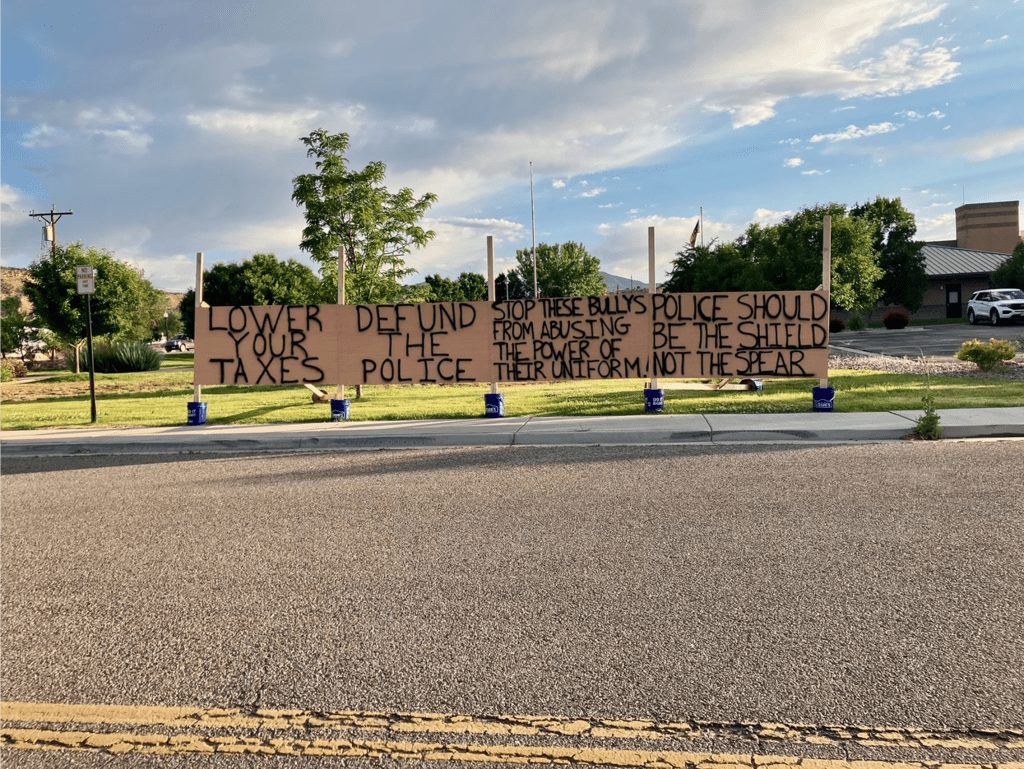
“He didn’t do this in the dark, he was here when TRIDENT was formed in 1994,” said Pat.
The cease and desist letter speculates, “Perhaps because SPEAR allows for information sharing in violation of Colorado law, you concealed its creation from the residents of Garfield County.”
Additionally, emails show finances were handled in an ad hoc manner from the start.
“It looks like we will run out of buy money [money for controlled narcotics purchases] for the year next week,” wrote Rifle Chief of Police Mike Tyler in early July of 2023.
“Speaking of money, the TRIDENT accounts are almost depleted by covering initial and monthly expenses. Until SPEAR gets a million dollar seizure, we will need to discuss covering future fixed and variable expenses,” wrote Vallario ten days later, explaining that the whole taskforce was broke.
Emails indicate that asset forfeiture was supposed to be a major source of funding for SPEAR. Asset forfeiture is when police bank the money and property seized from suspected criminals, sometimes even when they are found not guilty. Vallario fumed at changes in Colorado and federal law that limited the ability of local agencies to profit off of asset forfeiture.
After Colorado passed a law that earmarks the first $50,000 of assets seized to go to the state’s coffers, Vallario announced a policy of strategic noncompliance.
“With the state of Colorado grabbing all the money under $50,000, we just aren’t going to worry about going through the paperwork nightmare of seizure requests. If it’s over then we will go after it.”
The other main source of funding other than begging money from member police departments is the Rocky Mountain High Intensity Drug Trafficking Area (RMHIDTA), which provides funding, training, and intelligence-sharing tools with local drug task forces and falls under the Office of National Drug Policy.
In 2026, SPEAR received $51,000 from RMHIDTA funds, which begs the question: How is the federal government granting funds to a task force that legally doesn’t even exist?
Keith Weis, the director of RMHIDTA, told The Rev that from their point of view, nothing changed when TRIDENT became SPEAR, and that funds were being sent to the same fiscal sponsor.
“It’s a black hole”
From its very inception, SPEAR has been keeping secrets and spinning the narrative. “It’s a black hole when it comes to transparency,” said Pat.
In May, Garfield County citizens first filed a CORA request for SPEAR documents. The request came back with an estimated $10,000 price tag and obvious attempt to stonewall. A more refined records request was filed in June, which should have been less expensive but came back with a $14,370 estimate. Eventually, in July, a pared-down request for just the legal formational documents any IGA should have was filed.
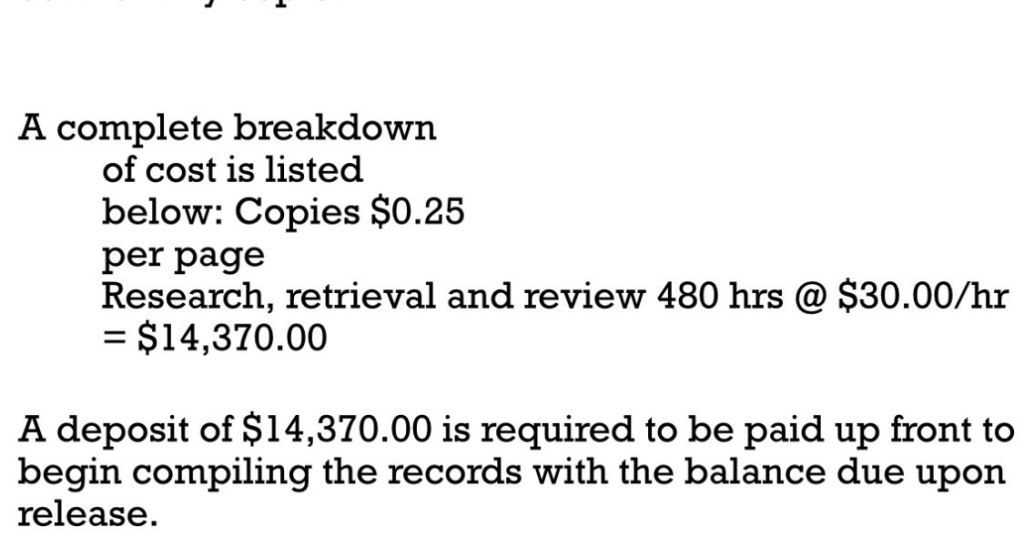
Initially, Vallario called the CORA request “ridiculous.” In the same email, he hinted at another loophole SPEAR is using to dodge records requests, “We cannot provide any records pertaining to your agencies, so she will have to request those via state or federal records request procedure. Basically, SPEAR is not a division of the GCSO. We are one member of a multi-jurisdictional task force.”
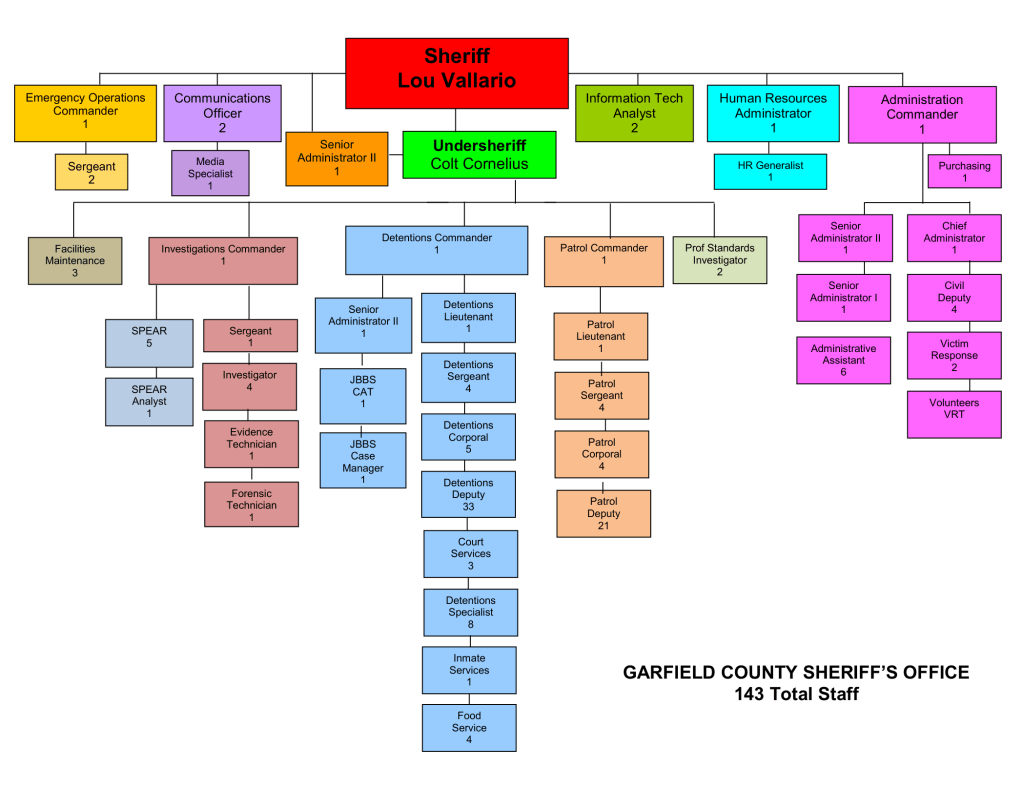
SPEAR explicitly doesn’t maintain any records, nor does it have a channel for making public records requests. SPEAR additionally doesn’t employ public information officers who could help journalists provide transparency.
In another email, Vallario expressed his disdain with state oversight of SPEAR, and hints that they do have something to hide. “Regarding the task force requirements to report EVERY operation in an annual report, that’s just stupid, time consuming and is solely for the purpose of them combing through reports and finding any op that assisted ICE.”
In Vallario’s world, journalists are only there to print what he wants them to print.
In one email thread, Vallario asked the editor of the Glenwood Springs Post Independent why the pictures and names of suspects in a recent SPEAR bust weren’t printed in the story that the paper ran. After Editor John Stroud explained the paper’s policy, Vallario shot back, “Fortunately, we have a large following on our Facebook page where the residents can get the full story.”
The Revolutionist has had its own transparency issues with SPEAR and the GCSO.
Back in June, we began investigating the immigration arrest of Luis Rivas, one of the disturbing cases that is highlighted in the cease and desist letter.
A viral video showed a GCSO deputy and a SPEAR TFO arresting Rivas in the Glenwood Springs Wal-Mart parking lot. We learned from family members that GCSO deputies then transported Rivas to De Beque (in Mesa County) and transferred him into ICE custody behind the Maverick gas station.
After numerous back and forth emails and an excessive delay, we finally got them to release the incident report.
From that incident report, we repeatedly requested body-worn camera (BWC) footage from the incident. It was first denied due to “ongoing federal investigations.”
A couple months later, after Rivas had been deported back to Mexico, we requested the BWC again. We were denied because the request “pertains to . . . security procedures.”
Finally, after more than six months, GCSO allowed Aspen Public Radio to view the BWC footage. They were not allowed to make a copy of the footage, just view it. That’s how we learned that four GCSO deputies had responded to “assist” an HSI agent and that two deputies then transported Rivas all the way to De Beque.
The video confirmed that the incident report we received was massively flawed.
“From a justice point of view, from a transparency point of view, this should be a five alarm fire,” said Pat. The report should have listed every deputy who responded so future investigators could follow up and ask questions. “Without accurate reporting, there can be no follow-up — no justice.”
The report also noted the duration of the incident was one minute, while it took deputies hours to drive to De Beque and back. Additionally, there was no paperwork that established a chain of custody for the detainee.
Conversely, the emails also show an agency obsessed with public relations and keeping “SPEAR in the public eye to maintain support.”
Vallario never misses an opportunity to justify SPEAR’s relevance, even if facts have to be manipulated.
SPEAR often rolled numerous unrelated cases together to sell the perception that they’d busted some major drug ring, like they did in the recent ‘Wire’ case. “Numerous other cases . . . will be rolled into this one,” read a May 2025, SPEAR agenda.
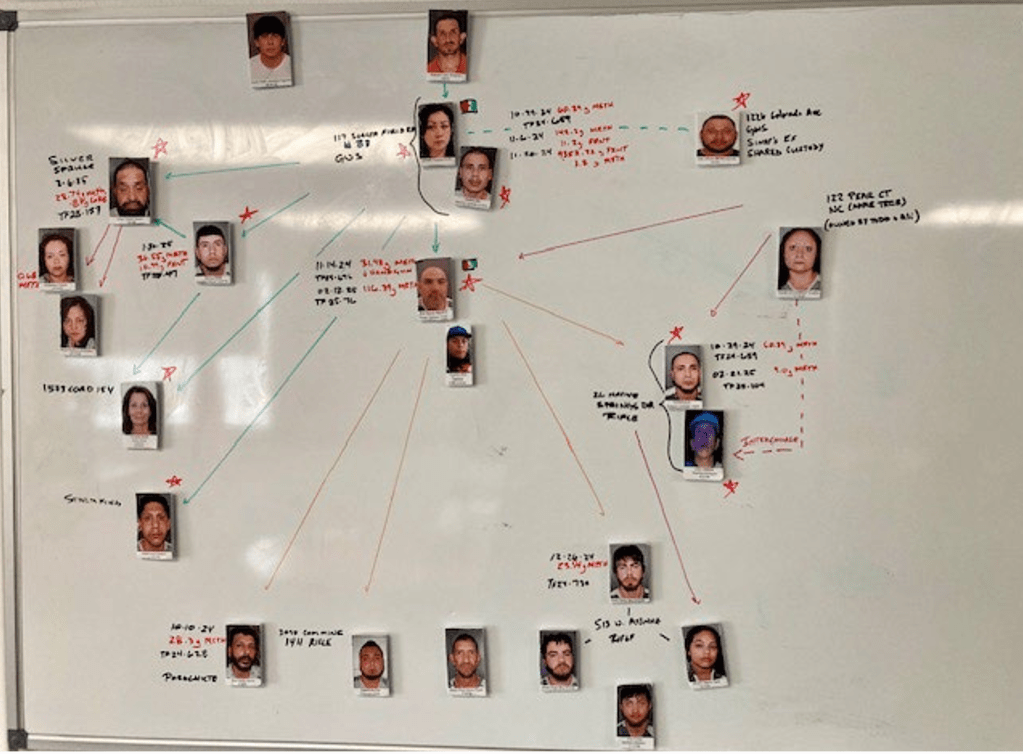
Press releases often emphasize incidents and assists numbers; in a 2025 press release, a six-month performance report, SPEAR boasted of 416 incidents but only 46 arrests.
It also appears that Vallario also counts arrests that were not made by SPEAR to boost his numbers. A 2023 arrest made in Eagle County was counted in SPEAR press releases as was a 2024 arrest in Silt in which SPEAR TFOs responded after the arrest.
Despite the public messaging, privately, Vallario was questioning SPEAR’s effectiveness. In a July 7, 2023 email, he wrote. “Are we assisting [other agencies] based on our mission of major crimes that the agencies need assistance with, or are we supplanting their manpower? It’s more of a rhetorical question, but I want to make sure we don’t drift from the mission.”
“Just gone”
Vallario’s public statements, published position papers, and formal jail procedures indicate, according to the cease and desist letter, an “ongoing coordination with ICE regarding jail releases, including the prohibited sharing of non-public PII, continued custody beyond legal release eligibility, and the facilitation of ICE custody transfers without a judicial warrant in non public areas of the Garfield County Jail in violation” of Colorado law.
“We have heard stories of Garfield County not releasing community members after they have paid their bonds, of people being picked up directly from private areas in the jails, and even the DA checking if people have immigration detainers, even for minor traffic infractions,” said Rep. Velasco in a statement at the state capitol.
A GCSO jail training document, obtained by The Denver Post and titled “Booking Training Guide on Immigration Detainers,” spells out in black and white that Vallario’s jail is simply not following Colorado law. In Colorado, it’s illegal to honor any immigration detainer, which is just a legal sounding request, not a judicial warrant.
In a nepotistic side-note, Vallario’s wife, Kim Vallario, is the jail commander.
“Yes, there is domestic violence happening, it’s hard, they don’t call the police because if they go to jail, they are just gone,” said Angel, explaining that losing a spouse to the ICE detention system and deportation is a bigger fear than the domestic violence they are experiencing.
There is another Glenwood Springs facility where people disappear, and like SPEAR, it doesn’t seem to have its papers in order.
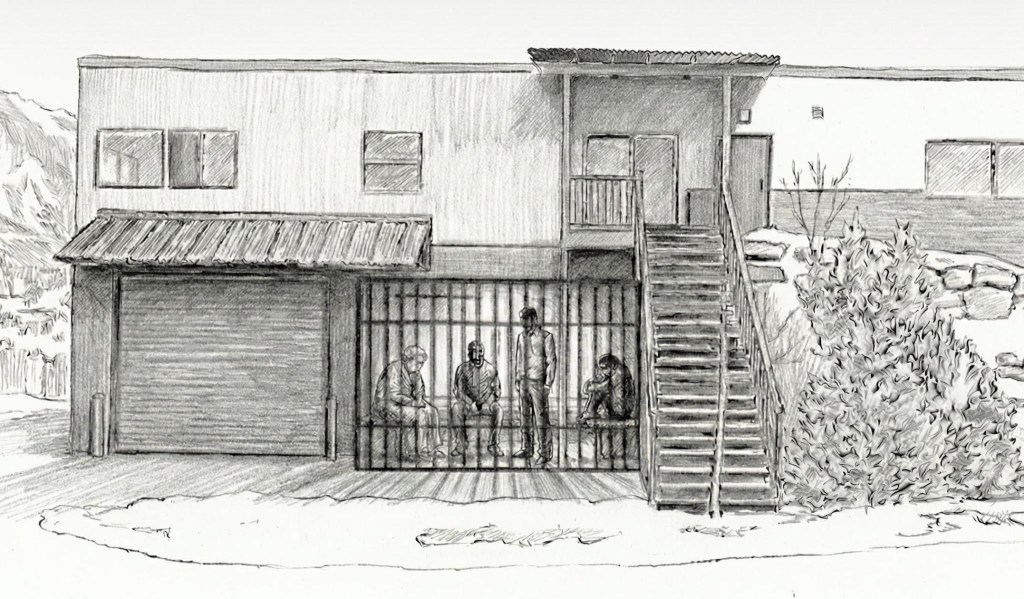
The ICE field office at 100 Midland Avenue was first set up in 2004. At the time, the city granted a temporary certificate of occupancy and a list of things to bring up to code in order for the facility to be used as a detention center.
The required upgrades to the facility never happened, and the temporary certificate of occupancy expired in 2005. A statement released by the city of Glenwood Springs confirmed “a final Certificate of Occupancy was never issued . . . following the building’s completion more than 20 years ago.”
According to data from the Deportation Data Project, 83 people were held at the facility from Jan. 25, 2025 thru Oct. 25, 2025. People are being held for up to two days in a facility that doesn’t have its permits and was never brought up to code.
On February 26, a man was followed out of a Garfield County Courtroom and was arrested by ICE. Within minutes he went from chatting with his wife to being put in full restraints, and moved into the unlicensed, uninspected ICE detention center, that is known in the community as a point of no return. There he suffered a panic attack. A Glenwood Springs Fire Department Ambulance responded.
Video obtained by The Revolutionist, shows that it took a full 20 minutes after the ambulance arrived before the gate and garage door opened, so they could access the patient. A 20-minute delay can be the difference between life and death, but luckily it wasn’t in this case.

According to community advocates, the nondescript commercial facade is the entry point into the deportation pipeline. In the last year there are no known cases where someone comes back after being detained at the Glenwood Holdroom. Even in the case of an attorney coming to the door with the evidence of protected status, extreme hardship and urgent medical needs, the posture of local ICE agents is that legal challenges can be worked out in Aurora.
In recent weeks, the citizens of Glenwood Springs have been making good use of public comment to bring this important issue to the forefront, so much so that activists have been targeted with a cease and desist letter from the owners of the building that housed the ICE Hold Room, in an attempt to silence their effective work.
Former Glenwood Springs Mayor Bruce Christensen, who was on Glenwood Springs city council when the ICE Hold Room was first established, wrote in a statement to council, “I realize that ICE activities were somewhat less controversial 20 years ago, but in retrospect, the re-purposing of commercial property to be used as a detention facility should have included at least notification of Council and some opportunity for community input.”
The failure to properly permit the Glenwood Springs ICE Field Office could be a clerical error like the city is claiming, but the same city attorney who failed in his duties to permit the ICE field office is the same city attorney who never asked himself how the Glenwood Springs Police Department were participating in SPEAR without ever holding a vote to formalize the IGA.
“We are scared”
Vallario’s lawlessness and acquiescence by the municipalities of Garfield County has essentially turned the county into a “sundown” jurisdiction where communities are afraid and do not trust local law enforcement, for good reason.
Angel spends much of their time working with the broken families left behind in the wake of immigration enforcement.
“They say ‘I don’t know how to pay the rent, I don’t have a job,’” said Angel. “Many of the women don’t work, they stay at home with the kids. It’s very difficult when the head of the house is arrested.”
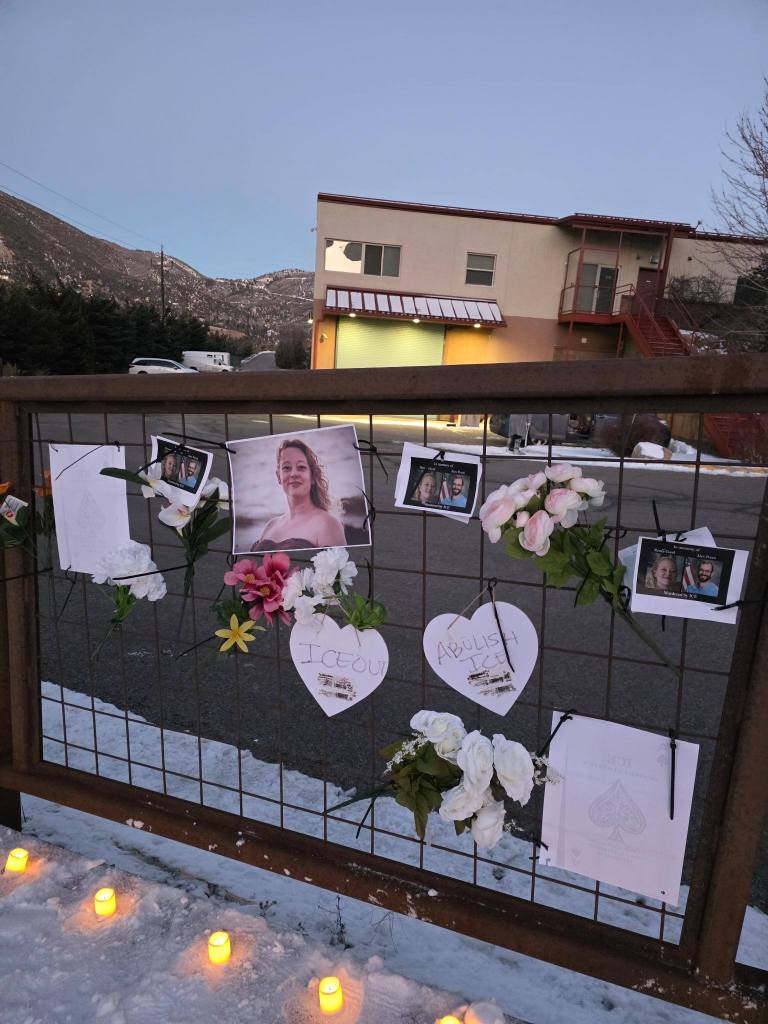
Angel often finds that “they want to talk with someone that understands, someone that doesn’t judge them.” Angel explained that depression is common with those left behind to pick up the pieces. “I have to tell them they are strong, they are doing the right things.”
Though Angel is a source of strength for many in their community, they said, “Sometimes I am overwhelmed, it’s just so much sometimes, but we are strong, and the community needs people to step up.”
Angel helps connect families to resources, consoles, and counsels them through the intricacies of the immigration process. They make sure those left behind are not forgotten. “I have to constantly tell them they are not alone.”
Mistrust and fear are rampant in Angel’s community. People have stopped going out and have changed their shopping and social habits. Families are making emergency plans for what to do if one or both parents are taken by ICE.
“We are scared,” Angel said. “I don’t let my son go out after 9:30 at night. We are all U.S. citizens, but we don’t trust. I tell every one of my son’s friends ‘don’t drive at night!’ We don’t want to have to call moms to tell them their kids have been taken by ICE.”
“We know what they said about [Representative] Elizabeth Velasco, we deal with the rude police. If we don’t have to call 911, we don’t do it,” said Angel, referencing Vallario’s email about Representative Velasco.
Blame to go around
Every single law enforcement agency in the county [is in] this unregulated, unlawful, unauthorized, unaccountable task force that turns out,” said a Roaring Fork Valley citizen sleuth we are calling Sam, “doesn’t even legally exist.”
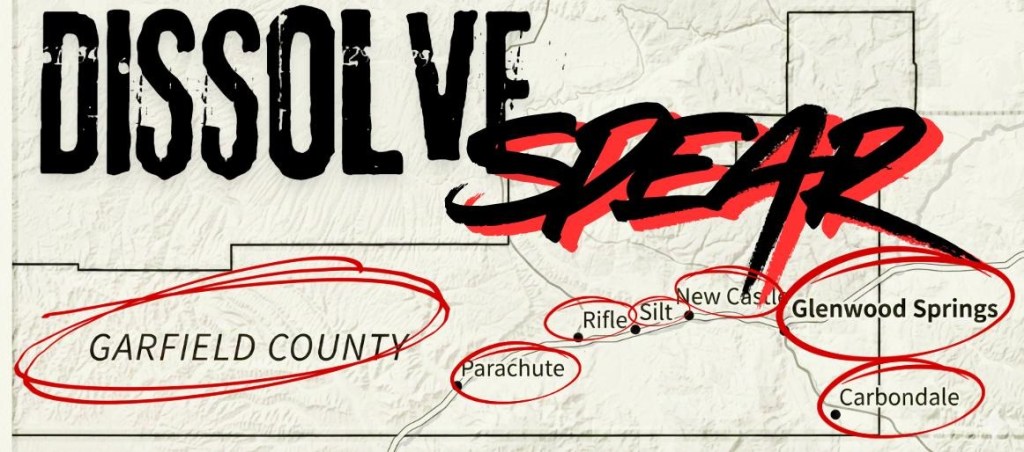
How has SPEAR, an organization with the legal standing on par with a book club, been allowed to manage confidential informants (CI), use tax-payer funds for controlled narcotics buys, launch investigations, and make arrests?
“This is bananas. I can’t imagine a world where six city managers, six city attorneys, six mayors, and none of them questioned how their police departments were participating in an interagency task force without going through the proper public process,” said Sam.
Part of the problem might stem from the fact that two-thirds of the cities and towns in Garfield County are represented by the same law firm — Karp, Nue, Hanlon. Karl Hanlon has served as the city attorney for Glenwood Springs from 2002-2006 and again from 2014 to now and failed to do his duty when it came to the ICE Field Office and failed again when it came to SPEAR.
City council members often do not have the legal expertise to navigate the nuance of municipal law and lean heavily on their city attorneys for guidance. Council members can not do their job of public oversight if the city attorney does not bring issues forward to the board and ensure that the city is following the law.
Our repeated attempts to get a comment from Karp, Nue, Hanlon, and Karl Hanlon have gone unanswered.
“Its pretty clear that this [SPEAR] ‘MOU’ wasn’t drafted or read by an attorney,” said Sam, using air quotes to signify that the MOU still has not been legally entered into.
Numerous clauses in the MOU seem to contradict Colorado and federal law, or assume authorities beyond the scope of an MOU.
One clause bestows the authority of every member agency upon every TFO. “Sorry, Lou, you can’t just turn all your TFOs into Homeland Security Investigation (HSI) agents,” said Sam.
Another clause binds all members of SPEAR to sharing data in “a central computerized criminal intelligence information system for the sole purpose of assisting local, state, and federal law enforcement agency personnel.” This clause would give federal agents access to the county-wide “New World” database as well as local law enforcement agencies Flock and other Automatic License Plate Reading (ALPR) camera data.
The MOU lacks any language to address Colorado laws forbidding the sharing of PII or aiding in immigration arrests and detention; a deficiency that Carbondale is looking to rectify.
“The chief [of Carbondale Police] is requesting that the SPEAR governing board consider amendments to the MOU, be explicit that we are operating in compliance with SB25-276,” said Hyland.
Since SPEAR includes HSI, an agency that has explicit federal Title 8 immigration enforcement authority, SPEAR has opened the Garfield County GCSO and the towns of Parachute, Rifle, Silt, New Castle, Glenwood Springs, and Carbondale to violations of Colorado law.
SPEAR may have even opened the Grand Junction Police Department to violations. The Revolutionist obtained documents that show the Nate Lagiglia, a SPEAR TFO involved in the arrest of Luis Rivas, had administrative access to GJPD’s Motorola Solutions cameras along I-70, and accessed those cameras five times during the well-publicized detention and arrest of Caroline Goncalves in Mesa County.
“Lou loves the ‘assist’ language, as if that carves out some loophole in Colorado law,” Pat said. One clause in the MOU leans into this: “This agreement also constitutes a standing request for assistance on behalf of each participating agency to utilize task force officers to enforce any violations of law.”
Vallario again pushed this idea of ‘‘assists’’ as a loophole in a Feb. 7, 2025 position paper about ICE and local law enforcement. “I will support ANY other law enforcement agency when requested, as an ‘agency assist’ for the best interest of public safety. There are no laws preventing me from supporting another law enforcement agency and I will always do so when asked.”
“At some level, they have all made a deal with the devil,” said Pat. “Lou has misled [the municipalities of Garfield county] and now they are in for a penny — in for a pound.”
The company one keeps
Lou is always very quick to point out that Garfield County is a “non-sanctuary” county. Vallario often cites this nonbinding symbolic resolution with the color of law, but it does not exempt him, GCSO, or SPEAR from following Colorado law.
Other Western Slope counties like Mesa, Montrose, and Montezuma and cities like Eagle and Delta have passed similar nonbinding “non-sanctuary” resolutions, and evidence suggests these jurisdictions are also violating Colorado law in the same ways it’s being violated in Garfield County, though maybe more covertly.
Advocates across western Colorado have described numerous cases of local jails seeming to honor immigration detainers. They also all have stories that seem to indicate information sharing is happening between local law enforcement and the immigration enforcement agents.
“It’s hard to know, for sure,” said Beatriz Garcia, the Western Slope organizer for the Colorado Immigrants rights coalition. “It’s hard to get proof.”
Outside the amazing research being done by citizen sleuths in Glenwood Springs, there is one case where we did get some proof, and again it ties into the shadowy world of drug taskforces.
Just a few days after the arrest and transport of Luis Rivas by GCSO deputies, Mesa County Sheriff (MCSO) Deputy and Western Colorado Drug Task Force (WCDT) TFO Alex Zwink pulled over 19-year-old nursing student and DACA recipient Caroline Goncalves for following a semi too closely.
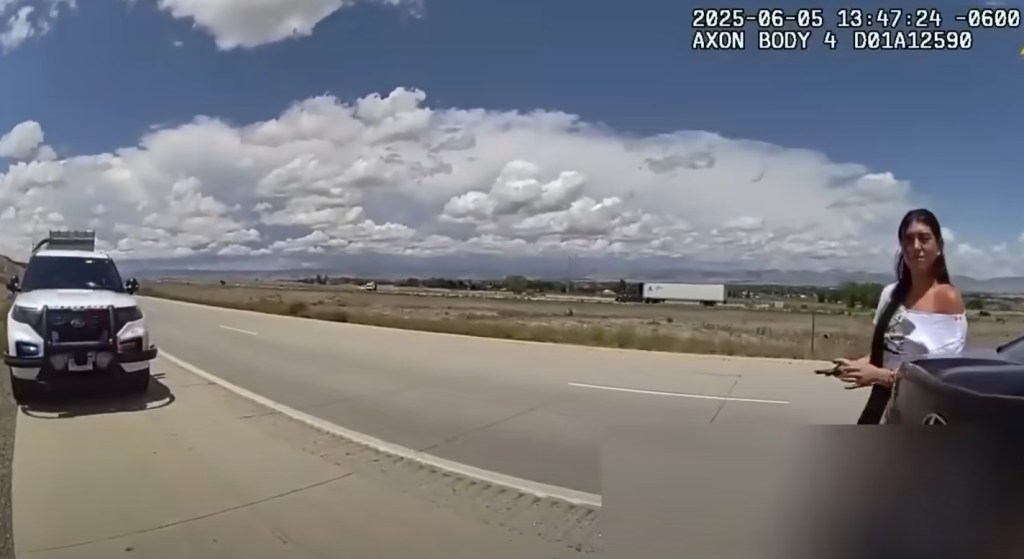
Zwink proceeded to share her PII in a task force Signal chat group called “GJ Highway Hitters.” He asked her about her immigration status and delayed the stop, and after he released her, a few miles down the interstate, ICE arrested her.
The resulting administrative review conducted by Mesa County Sheriff Todd Rowell revealed many concerning issues and evidence that the media missed despite it becoming a national news story.
Five MCSO deputies were ultimately reprimanded and two were suspended briefly without pay, and the attorney general sued Deputy Zwink personally. Mesa County countersued Governor Polis and Attorney General Phil Weiser, and Garfield County has since joined Mesa County’s suit challenging Colorado’s laws against local agencies aiding immigration enforcement.
The Goncalves case centered around local law enforcement sharing PII with federal agents involved in immigration enforcement, and Goncalves was just one of numerous cases where MCSO, CSP, and an Eagle County sheriff’s deputy aided immigration efforts via the Signal chat.
The release also revealed that Zwink and fellow TFO Erik Olsen had been illegally aiding in immigration enforcement on a regular basis. An appreciative HSI agent messaged the chat “Zwinck is gonna get ERO [Enforcement and Removal Operations] interdictor of the year.” After assisting in yet another immigration arrest, Zwink messaged the group “Oh my gosh. We better get some bitchin’ Christmas baskets from you guys.”
During their investigation interviews, Olsen said he had been on scene for “dozens” of immigration arrests, while Zwink guessed that he had been on scene for three to five immigration arrests. In one case, Zwink even handcuffed a man and held them for immigration enforcement.
Why were the TFO’s even sharing PII in the first place? A basic question that wasn’t asked by the media but was answered with an analysis of almost 12 hours of interviews and 81 pages of documents from the MCSO’s investigation.
When any of these local TFOs stop anyone, they run their name and licence plate through a federal database, the Deconfliction and Information Coordination Endeavor, or DICE.
DICE is a deconfliction tool. In theory, it’s supposed to stop a beat cop from busting a subject of a larger ongoing investigation. DICE queries return information on recent border crossings, ongoing investigations of the subject, recent ALPR hits, affiliations to criminal organizations, and, most concerningly to Colorado law, immigration status.
According to interviews released as part of the MCSO administrative review, we get a glimpse into this little-known federal database.
Every traffic stop, TFOs were sending the subject’s PII to an HSI data analyst via the chat group. The analyst would then run that information through DICE and then relay the results back to TFO via Signal. Because only federal officers can access DICE on behalf of local TFOs and the information has to be relayed through federal agents, it’s likely that almost every traffic stop by TFOs shares PII with federal agencies involved in immigration enforcement in violation of Colorado law, SB25-276.
Like SPEAR, even legally established task forces operate in a gray zone, with little oversight and less transparency.
“It’s a different animal supervising interdiction,” said David “Bucky” Holdren, Zwink’s supervisor in an investigative interview. “Once they know what they [TFOs] are doing, they don’t have a set schedule, they go out when they get tips, they go out when the feeling’s right. So it’s hard to supervise them like I would a patrol team.”
Holdren did not know his TFOs were using a Signal chat to share PII with federal agents. “It wasn’t until that Monday, and then I actually had some conversations with [Former MCSO investigator] Mike Miller about ‘what’s Signal.’” Holdren clearly states, “I didn’t know they were using Signal.”
Holdren also didn’t know anything about the DICE database, “After we learned about DICE, I called him [Sergeant Joe LeMoin]. I said ‘what’s DICE?’ and he had no clue.”
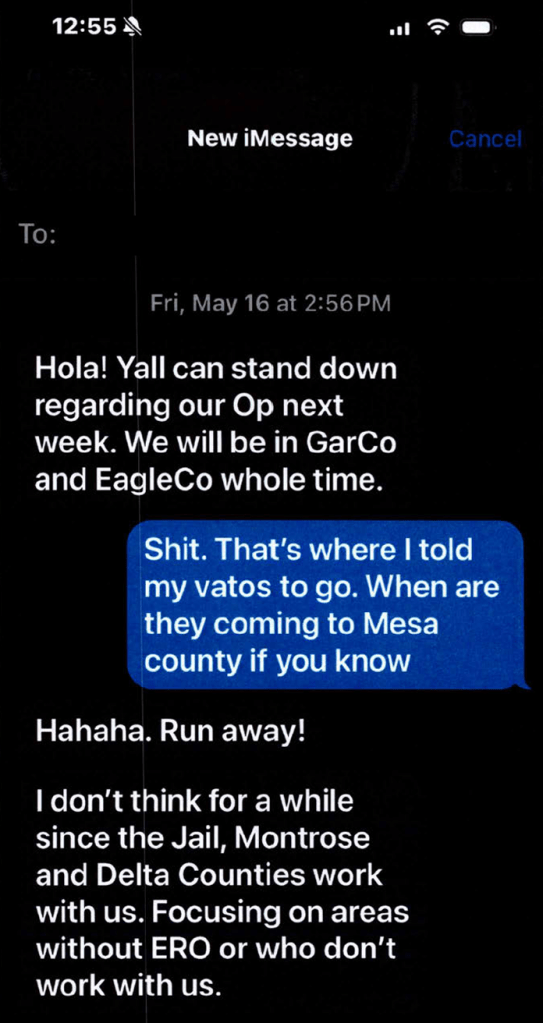
Also concerning was a text message thread between HSI acting agent in charge Eric Selfridge and MCSO Lieutenant Holdren. In the final message, Selfridge explains why ICE was canceling a planned operation in Mesa County and indicates that from ICE and HSI’s point of view “the [Mesa County] Jail, Montrose and Delta counties work with us,” allowing the feds to “[focus] on areas without ERO or who don’t work with us.”
These task forces, by their very nature of combining local and federal law enforcement agencies into a poorly supervised unaccountable parallel agency, creates the conditions for these violations of state law to occur away from prying eyes.
Accountability is the challenge, a challenge that Representative Velasco seems willing to take on. “I will continue to do my job to make laws that hold bad actors accountable, to have transparency when it comes to these task forces, to uphold our human and constitutional rights,” she said.
A new hope
Vallario who has been sheriff in Garfield County since 2002, has already announced that he is not seeking reelection in 2026.
“We know Vallario is going soon,” said Angel. “We have to make sure whoever is coming in does not collaborate with ICE.” Angel would like to see a new sheriff with “more respect for our community and our people that have been living and working here for years.”
“This is the end of that power that they have been working, this in-the-dark, in-the-shadows, wink-wink kind of power. At the end of the day, this is hopeful,” said Pat.
“The scale is staggering and it’s overwhelming until you say ‘Oh I just have to get my municipality to withdraw from SPEAR,’” said Pat. “They will be pretty easy to pick off if we work together.” Activists in Garfield county just dropped a series of petitions targeted at the municipalities that make up SPEAR.
“We just need to show up. We just need to be there. Hold them accountable. There are so many more of us than them,” Pat continued.
There are “lots of ways people can play roles, but the most important is to be there for your neighbor and engage in what is happening and document [injustice] as much as you can,” said Garcia, she also stressed the importance of voting this coming November.
“There are a few gaps,” said Garcia, in our current immigrant protections, “and we are trying to see how we can, with new legislation, try to fill those gaps. So we can hold institutions accountable for their actions.”
“The point is our communities deserve to feel safe. To be able to call 911, and trust that law enforcement will assist,” said Representative Velasco.
“It’s time for action,” said Garcia, “and everyone to engage in those actions.”
Take Action!
GarCo Calls to Action
SPEAR: https://linktr.ee/dissolvespear
ICE HOLD ROOM: https://linktr.ee/midlandcenter
Dissolve SPEAR Petitions by Municipality and County-wide: https://forms.gle/dGitfK1ERpey7JFe7
Send this story and your outrage to:
Governor Polis governorpolis@state.co.us Colorado AG Weiser: ag@coag.co
Tell them to “Investigate Vallario!” and “No More Lawless Western Slope!”
DeFlock Western Colorado
Mesa County; deflockmesacounty@proton.me; Durango: @deflockdurango on Instagram
Become a Colorado Rapid Response Network ‘Confirmer’ and document ICE in your community. Information gathered by confirmers, shape legislation and informs litigation and keeps our communities informed and safer.
Mesa County: mesacountyconfirmers@proton.me
State: https://coloradorapidresponsenetwork.com/auth
IF YOU WITNESS ICE ACTIVITY Call the CORRN Hotline. Take a second and put the number in your phone: 1-844-864-8341
Print the zine format of this article and distribute in your community.
WE KEEP US SAFE
###
The Revolutionist is 100% volunteer run and subscriber funded. We do not sell our soul for advertising dollars, nor do we prostrate ourselves for grants from the non-profit industrial complex. We are community media. Join the community! Subscribe today at whatever rate you can and get a hard copy of The Revolutionist in your mailbox. Subscribing subsidizes free distribution copies.


 The Revolutionist