
by Ky
The art market exploits creatives just like any other industry under capitalism. The art market additionally perpetuates harm against and has historically dismissed many artists who emotionally express themselves, particularly women and women of color, until they gain mainstream acceptance and profitability. It fails to address core systemic issues like colonialism, racism, patriarchy, and violence against women, in fact it benefits from the suffering of artists and commodifies trauma.
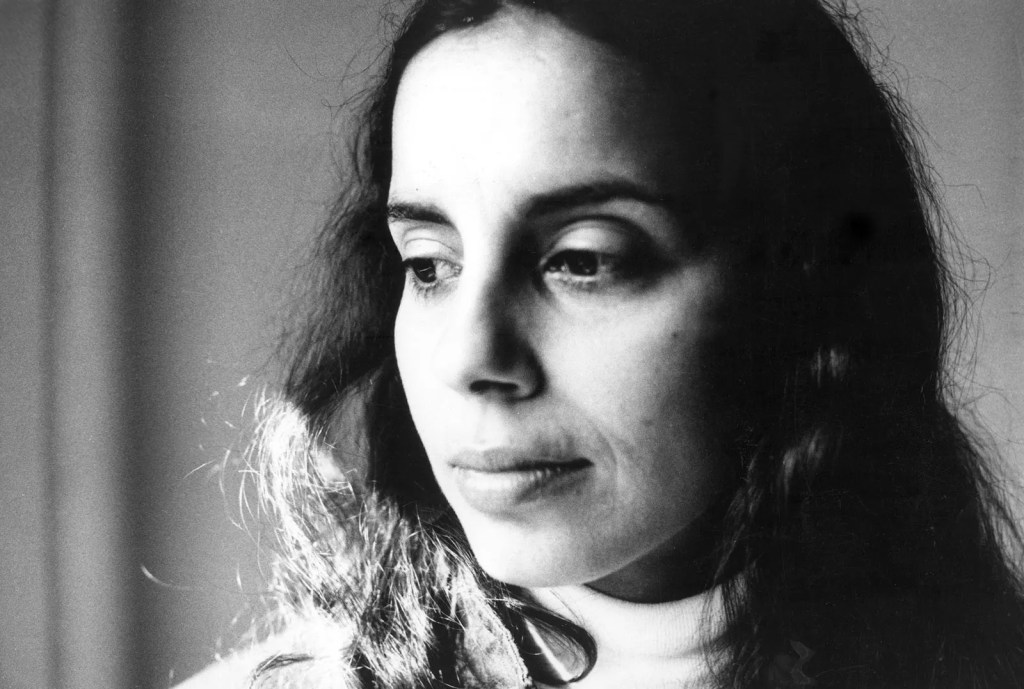
Ana Mendieta was exploited by the art industry which capitalized on cultural and gender-biased exposure– portraying her as a tortured artist in context of her exile and death while neglecting her actual work. However, her work’s radical and transforming content continues to inspire intellectuals, feminists, and artists resisting systematic oppression.
Ana Mendieta, born in Cuba in 1948, into an economically and politically privileged family. Her father was a counter-revolutionary, and was convicted of treason for his involvement in the failed CIA orchestrated Bay of Pigs invasion of Cuba, and served an eighteen-year political prison sentence.
In 1961, the CIA and the Catholic Church as part of Operation Pedro Pan sent 14,000 Cuban children from counterrevolutionary families in Cuba to the United States, including twelve-year-old Ana Mendieta and her sister. Mendieta was separated from her family, culture, and social privilege. The Mendieta sisters navigated various Catholic orphanages until they settled into long-term foster care in rural Iowa, where she experienced racial marginalization and discrimination for the first time. Mendieta, at this time began embracing a new identity embodying “otherness.”
Mendieta attended the University of Iowa, receiving three degrees including a BA in 1969, an MFA in painting in 1972, and an MFA in multimedia in 1977.
In 1980, with financial assistance from grants and an invitation from the communist government, she took a brief trip back to Havana with fellow artists. Mendieta took this opportunity to connect artists between the two countries. After returning to the States, she relocated to New York City and met minimalist sculptor Carl Andre. She later married Carl Andre in 1985. Just before her first major solo exhibition at the A.I.R. Gallery in New York, she faced an untimely death at the age of 36.
Despite being called interdisciplinary in her art practice, Mendieta preferred the simple term “artist.” She primarily worked in performance art, film, photography, sculpture, and body and land art. Themes of exile, identity, gender, displacement, violence, cultural memory, and spiritual reconnection were exposed in her work. Paramount to her life and artistic practice were the unique life experiences that shaped her identity. She rejected patriarchal norms while navigating institutional biases. Mendieta’s work echoed feminist thought, collective resistance, and healing.
Mendieta practiced “abjection as a politicized aesthetic strategy” to confront dominant cultural norms and provoke engagement with her audience. Using her body to create her work, she consistently asserted herself as the subject, not an object. In Glass on Body (1972), Mendieta pressed her face and torso against a pane of glass, distorting her image to evoke feelings of violence and discomfort. Similarly, in Facial Cosmetic Variations (1972), Mendieta manipulated her appearance with pantyhose, wigs, and cosmetics to embody racialized and classed female identities.
Deeply impacted by the rape and murder of a female peer at the University of Iowa in 1973, Mendieta’s Rape Scene (1973) called attention the horrific event. The artist invited her classmates to her apartment to find her tied to a table and smeared in blood, re-enacting the aftermath of rape. She encouraged discussion after the performance as she confronted the audience with the brutal reality of violence against women as a call to action.
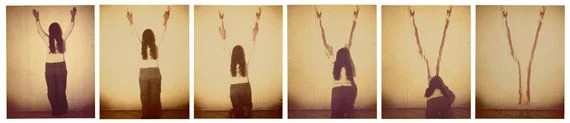
Mendieta found grounding and healing aspects in the practice of Afro-Cuban Santería. This provided her with a spiritual and cultural link to her motherland, a way to stay connected although she had been raised Catholic. The artist’s frequent use of blood was often associated with Santeria, as it symbolizes a powerful life force. Mendieta associated herself with the Oricha Ochún, who, in the Santeria practice, symbolized feminine power, rivers, sexuality, fertility, and blood as a life force. Mendieta’s performances in Chicken Piece (1972), Bird Transformation (1972), and Blood + Feathers (1974) all reflect the Santeria ritual. In Chicken Piece, the artist performs the killing of a live chicken on stage, covering herself in its blood. This raw and confrontational act forced the audience to witness ritualized violence tied to survival. In Bird Transformation, she covers her body in blood and feathers at the river’s edge, transforming herself into a sacrificial chicken. In Blood + Feathers, Mendieta lays her body on the ground and rolls through blood and feathers, removing the line between human/animal and death/ rebirth. She becomes the sacrifice by turning her body into the ritual space. Sweating Blood is one of Mendieta’s early experiments with film, in which she sits in a meditative, trance-like state with closed eyes. Blood slowly runs down her forehead in a slow loop to intensify the visual of the physical and spiritual weight of the ritual. In Blood Sign (1974), Mendieta kneels with her arms elbow-deep in animal blood. Using her limbs as paintbrushes, she marks a V shape on a wall in slow motion while Cuban drums create an audio sensation.
Mendieta is most well-known for the Silueta Series (1973–1980), where she imprints her body into natural landscapes. The artist combined performance, body and land art, photography, and Super-8 film to explore the relationship between self, nature, and cultural belonging. Susan Best interprets Mendieta’s Siluetas as a space where she reclaims her connection to land and self through a ritualistic presence with her body.
She was pushing back against her artistic identity, which was categorized in simple terms as identity politics or reduced to feminist marginalization. Her Silueta series is revolutionary because it resists fixed concepts. This resistance gives her work radical power. By staying open, unresolved, and incomplete, her images create space for everything hard to represent; loss, memory, and the emotional weight of displacement.
Mariana Ortega refers to the state of existence where Mendieta’s displacement was not just “physical or political but a philosophical space of contradiction between presence and absence.”
In 1980, Mendieta curated, The Dialectics of Isolation: An Exhibition of Third World Women Artists (1980) exhibition Mendieta at the A.I.R. Gallery. “After World War II, the label Third World came into being about the people of Africa, Asia, and Latin America. The movement of Unaligned Nations was founded in 1961 with a meeting in Belgrade. They aim to end colonialism, racism, and exploitation. We of the Third World in the United States have the same concerns as the people of the Unaligned Nations,” said Mendieta in an artist’s statement.

On September 8, 1985 Mendieta fatally fell out of her 34th floor bedroom window of a NYC apartment she shared with her husband, Carl Andre, who was charged with her death. During the trial, the content of Mendieta’s work became a focus of Andre’s defense as they dissected, misconstrued, and used her artwork against her. Her work was described as macabre prophecies of her fate and deemed self-deprecating. Mendieta’s cultural identity and spiritual practice of Santería were racialized. Media and courtroom narratives created characteristics of the classic tortured artist, stigmatizing her as mentally ill. This is evidenced by descriptions of Mendieta as ‘unstable,’ ‘hyperemotional,’ and a ‘volatile Latina.’ Neighbors hearing Mendieta screaming NO! moments before she went out the window and Andre wearing fresh scratches on his face and arms was not evidence enough, beyond a reasonable doubt, to deem Andre guilty in her death. In 1988, Carl Andre was acquitted by the judge after he waived his right to a jury.
Feminist and art communities deeply contested the ruling and viewed the outcome as a failure to address violence against women. The case exposed systemic flaws in the legal handling of domestic violence, and for many, it symbolized the art world’s complicity in silencing female suffering. Andre had the support of the De Menil family, oil heirs with deep connections to the Dia Foundation. Fellow artist Frank Stella reportedly contributed $50,000 toward his bail. Despite the dire charges, Andre’s work remained in the Paula Cooper Gallery during the trialand continued to be exhibited in major art institutions.
Mendieta was reduced to a tragic figure as photographs of her were viewed more than her art itself. She represents how the art world marginalizes artists who do not fit neatly into categories, failing to recognize the depth of her work. The artist was slowly recognized as feminism and identity politics became of mainstream interest however Mendieta’s exile and violent death took her center stage, overshadowing her actual work.
The art industry thrives off tragedy, especially when it fits the romanticized myth of the “tortured artist.” The imbalance in recognition between Mendieta and Andre confirms the art industry participates and perpetuates systemic racism and sexism. The art industry exploited her image, turning her into a symbol of suffering while perpetuating the systematic oppression she fought against, failing to recognize her influence on the arts until she was profitable.
Mendieta’s radical and cultural healing aspects have continued to inspire scholars, feminists, artists, and activists. Supporters of her legacy have centered her art and the social and political themes she addressed to push back against the tortured artist narrative and the institutional neglect that surrounded her.
Her first career retrospective opened at the New Museum in 1987. Her work was exhibited internationally in Spain, Finland, and England in the following years. She was the subject of two documentary films Ana Mendieta: Fuego de Tierra in 1987 and Bloodwork: The Ana Mendieta Story in 2009. She was featured in the exhibit curated by Rosa de la Cruz, “You’ve Got to Know the Rules to Break Them,” at the 2015 Art Basel Miami Beach fair. De la Cruz emphasized that Mendieta’s work is profoundly influential but rarely seen in major art spaces.
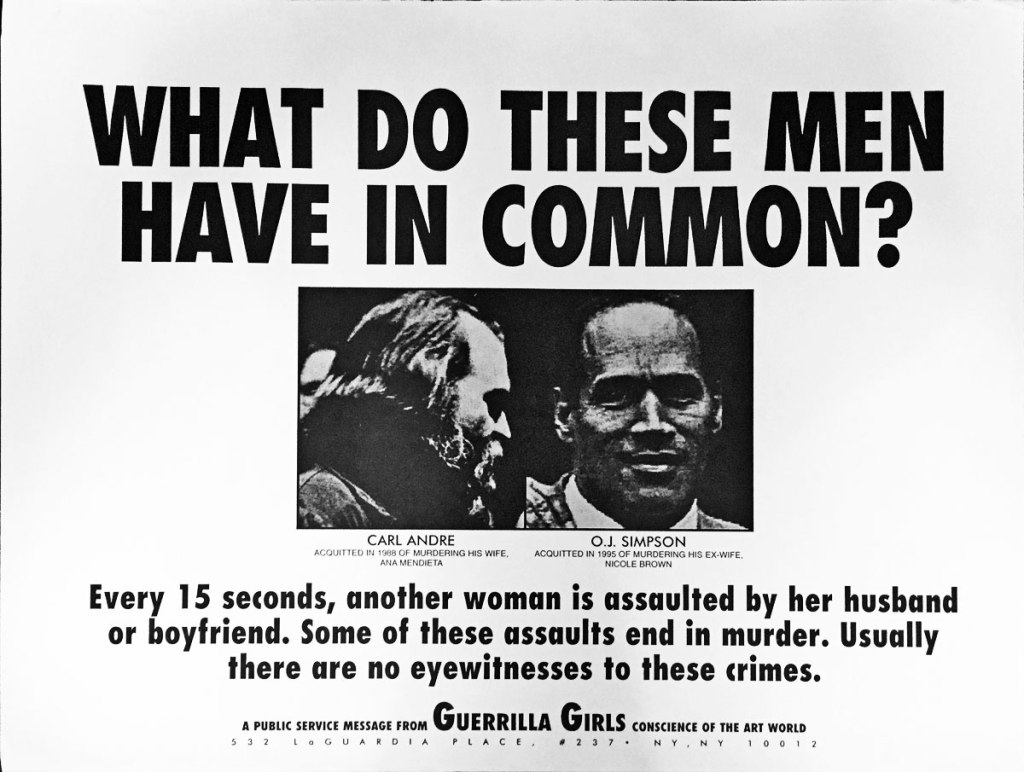
Activism in Mendieta’s name began during Carl Andre’s trial when flyers were anonymously distributed with the message “Ana Mendieta. Suicide? Accident? Murder?” along with the contact information for the District Attorney’s office, calling public attention to the suspicious circumstances surrounding her death. In 1992, the Guerrilla Girls and the Women’s Action Coalition (WAC) protested an exhibition of Andre’s work at the Guggenheim Soho, pointing to the art world’s silence about violence against women. The Guerrilla Girls compared Andre with O.J. Simpson in a 1995 poster, emphasizing the cultural impunity granted to men accused of domestic violence. In 2014, when Dia Chelsea hosted Andre’s Sculpture as Place exhibition, activists from the No Wave Performance Task Force (NWPTF) demonstrated outside the gallery, chanting and wearing shirts that read “I Wish Ana Mendieta Were Still Alive. The “Where Is Ana Mendieta?” campaign gained international visibility in 2016 during Andre’s show at Berlin’s Hamburger Bahnhof, where protesters recreated Mendieta’s Silueta outlines in red paint outside the museum.
The art industry, participating in cultural and gender-biased exposure, exploited Ana Mendieta by portraying her as a tortured artist; however, her work’s radical and healing content contradicts this trope as she continues to inspire intellectuals, feminists, and artists resisting structural oppression.
Her work continues to inspire writers, artists, and scholars who find her resistance meaningful. Her art continues to motivate action, holding institutions accountable for perpetuating harm. Ana Mendieta’s art was deeply personal and politically powerful. She confronted the systems that silenced women, used her body and earth to say what institutions refused to, and built a language of resistance that still resonates today.
###
The Revolutionist is 100% volunteer run and subscriber funded. We do not sell our soul for advertising dollars, nor do we prostrate ourselves for grants from the non-profit industrial complex. We are community media. Join the community! Subscribe today at whatever rate you can, and get a hard copy of The Revolutionist in your mailbox. Subscribing subsidizes free distribution copies.

Sources:
Alessandrini , Christopher, and Stephanie Wuertz. “Remembering Ana Mendieta.” The Metropolitan Museum of Art, 20 Oct. 2021, http://www.metmuseum.org/perspectives/from-the-vaults-remembering-ana-mendieta.
Alvarado, Leticia. “‘…towards a Personal Will to Continue Being “Other”’: Ana Mendieta’s
Abject Performances.” Journal of Latin American Cultural Studies 24, no. 1 (January 2,
2015): 65–85. https://doi.org/10.1080/13569325.2014.994092.
Best, Susan. “The Serial Spaces of Ana Mendieta.” Art History 30, no. 1 (February 2007):
57–82. https://doi.org/10.1111/j.1467-8365.2007.00532.x.
Cabanas, Kaira M. “Ana Mendieta: ‘Pain of Cuba, Body I Am.’” Woman’s Art Journal 20, no. 1
(1999): 12. https://doi.org/10.2307/1358840.
Cruz, Carlos A. “Ana Mendieta’s Art : A Journey through Her Life.” Latina Legacies, March 10,
2005, 225–39. https://doi.org/10.1093/oso/9780195153989.003.0015.
Herzberg, Julia Ann. Ana Mendieta, The Iowa Years: A Critical Study, 1969 through 1977. PhD
diss., City University of New York, 1998. ProQuest Dissertations Publishing. Publication
No. AAT9976881.
James, Conrad Michael. “Ana Mendieta: Art, Artist and Literary Afterlives.” Revista Canadiense
de Estudios Hispánicos 41, no. 3 (April 10, 2017): 569–95.
https://doi.org/10.18192/rceh.v41i3.1889.
Kelleher, Philip. “Curdling the Photographic Image: Ana Mendieta’s Silueta.” Woman’s Art
Journal 44, no. 2 (Fall/Winter 2023): 13–21.
McLaughlin, Rosanna. “How Ana Mendieta Became the Focus of a Feminist Movement.” Artsy,
March 10, 2015. https://www.artsy.net/article/artsy-editorial-how-ana-mendieta-became-
the-focus-of-a-feminist-movement.
Ortega, Mariana. “Exciled Space, In‐between Space: Existential Spatiality in Ana
Mendieta’sSiluetasSeries.” Philosophy & Geography 7, no. 1 (February 2004):
25–41. https://doi.org/10.1080/1090377042000196001.
Voien, Guelda. “The Remarkable Story of a Rebel Artist Ana Mendieta, Her Mysterious Death
and Cult Resurgence.” Observer, November 30, 2015. https://observer.com/2015/11/the-
remarkable-story-of-a-rebel-artist-ana-mendieta-her-mysterious-death-and-cult- r
esurgence/.
Weissberg, Stephanie. We Wanted A Revolution Black Radical Women 1965-85 A Sourcebook.
Edited by Catherine Morris and Rujeko Hockley. Ana Mendieta’s Dialectics of Isolation

 The Revolutionist